CARDIOVASCULAR DISEASE: THE PROBLEM
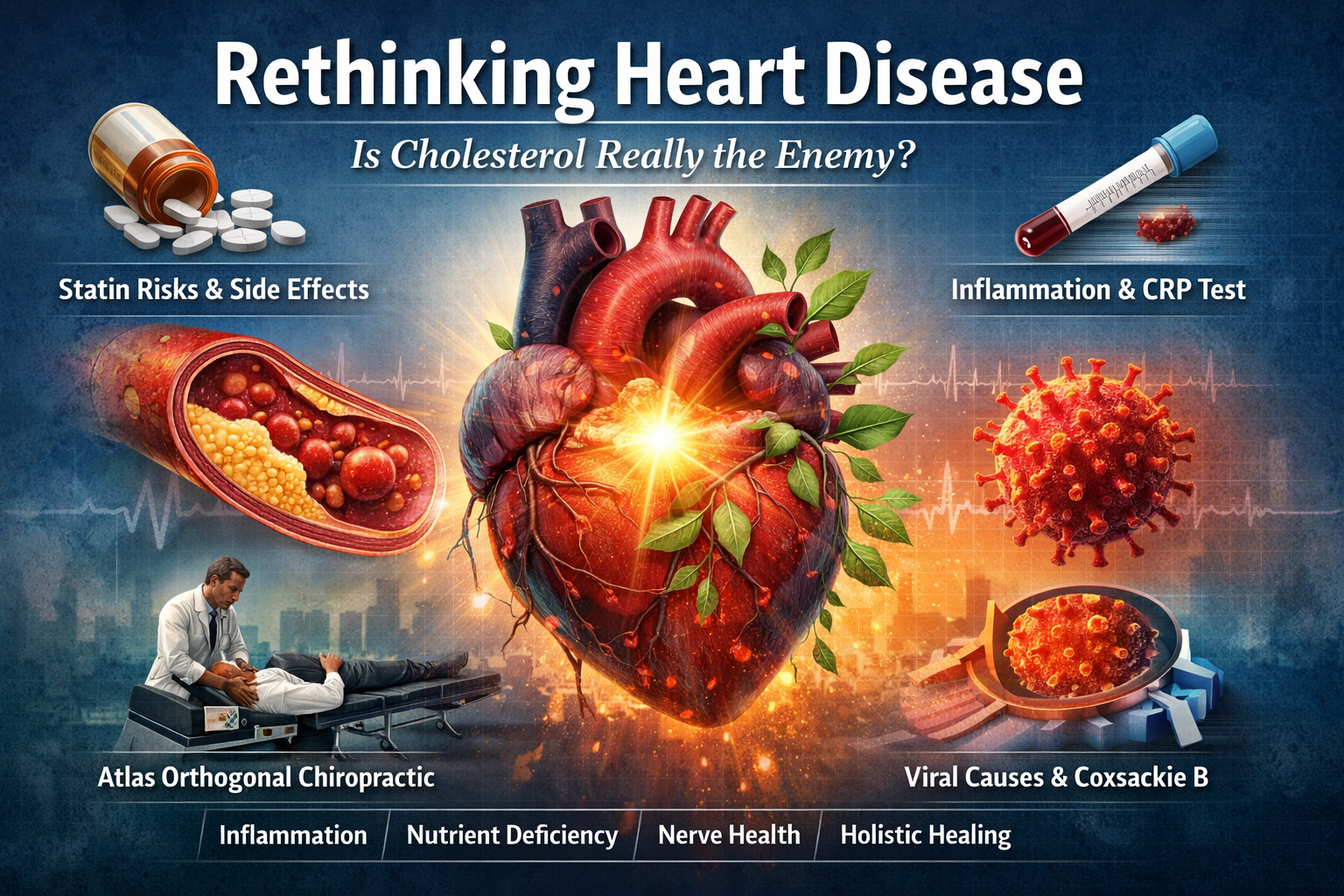
Rethinking Heart Disease: Why the Old Story May Be Failing Us
For decades, cardiovascular disease has held its place as the number one cause of death in the United States. What’s striking—and deeply concerning—is that this has been true since the 1950s, despite billions of dollars spent on research, pharmaceuticals, and public health campaigns. As Dr. Prather often says, that fact alone should raise some questions.
In this episode of Voice of Health, we take a step back to examine how we arrived at today’s dominant heart-disease narrative—and why it may be incomplete, or even misguided.
How Cholesterol Became the Villain
In the 1970s, researchers debated two primary theories about the root cause of heart disease:
Cholesterol as the primary cause
Inflammation, oxygen deprivation, and metabolic dysfunction as the drivers
The cholesterol theory ultimately “won,” shaping decades of medical practice and giving rise to widespread statin use. But Dr. Prather challenges this conclusion, pointing out that reducing cholesterol has not eliminated heart disease—and in some cases, may worsen underlying issues.
Cholesterol, he explains, is not inherently harmful. In fact, it is essential for:
Cell membrane repair
Hormone production
Nervous system function
Healing damaged tissue
From this perspective, cholesterol often rises in response to injury or inflammation—it shows up to help, not to harm.
Interestingly, populations with exceptional longevity frequently demonstrate total cholesterol levels near or above 300, suggesting that cholesterol itself may not be the enemy we’ve been taught to fear.
The Statin Question: Risk Without Resolution?
Statin medications are commonly prescribed to lower cholesterol, but Dr. Prather sees many patients seeking alternatives due to side effects such as:
Muscle weakness or pain
Fatigue
Cognitive changes
Nutrient depletion (notably CoQ10)
From a functional perspective, artificially lowering cholesterol may increase inflammation and impair the body’s natural repair mechanisms. Instead of addressing why cholesterol is elevated, statins often suppress a symptom—leaving the root cause unresolved.
This concern aligns with long-standing clinical observations discussed in The Eight Pillars of Perfect Health, Chapter 6-Nutrition
The Marker That Matters Most: Cardiac CRP
One of the most important tools discussed in this episode is the Cardiac C-Reactive Protein (CRP) test.
Unlike standard cholesterol panels, CRP measures systemic inflammation, which Dr. Prather calls “probably the best indicator of whether you’re going to have a heart attack or not.”
Inflammation damages the vascular lining, leading to stiffness, plaque instability, and impaired blood flow—key contributors to cardiovascular events.
The Four True Drivers of Cardiovascular Disease
According to Dr. Prather, heart disease is not a cholesterol problem—it’s a systems failure. The four primary contributors include:
1. Inflammation
Chronic inflammation damages blood vessels and accelerates vascular disease. Ironically, inflammation can worsen when cholesterol is artificially suppressed.
2. Oxygenation & Nutrient Deprivation
The heart has extremely high oxygen and nutrient demands. Poor circulation, anemia, mitochondrial dysfunction, or nutrient deficiencies can starve cardiac tissue and impair healing.
3. Electrical Conduction Disruption
Heart rhythm and vascular tone depend on proper nerve signaling and mineral balance. Misalignments, nerve interference, or mineral deficiencies can disrupt electrical conduction in the heart.
4. Food Allergies & Immune Triggers
Undiagnosed food sensitivities can drive systemic inflammation, immune activation, and vascular stress—often silently.
Viruses, Geography, and the Heart
One particularly compelling discussion centers on the Coxsackie B virus, which has been found at higher prevalence in certain regions, including Indianapolis.
This virus has a known affinity for heart tissue and can contribute to:
Myocarditis
Cardiomyopathy
Long-term cardiovascular dysfunction
In these cases, heart disease may have an infectious or immune-mediated origin—not a lipid one.
Structural Health and Blood Pressure
Perhaps most surprising to listeners is Dr. Prather’s assertion that Atlas Orthogonal chiropractic adjustments can sometimes have a greater impact on hypertension than prescription blood pressure medications.
By restoring proper alignment at the top of the spine, pressure on the brainstem and autonomic nervous system may be reduced—allowing blood pressure regulation to normalize naturally in some patients.
Can the Heart Heal?
One of the most hopeful messages from this episode is that the heart may regenerate far more than we once believed.
Dr. Prather shares that even he has been surprised by the improvements he’s witnessed in patients once inflammation is reduced, oxygenation improves, nutrients are restored, and nervous system function is supported.
These changes don’t come from a single pill—but from addressing the body as an integrated, self-healing system.
A New Conversation About Heart Health
This episode challenges a long-standing narrative and invites a deeper question:
What if heart disease isn’t a cholesterol problem at all—but a sign that the body has been trying to survive under chronic stress, inflammation, and deficiency?
True prevention may require moving beyond numbers on a lab report and toward a model that honors structure, function, nutrition, immunity, and the body’s innate capacity to heal.
If you’ve been told your labs are “normal,” but you don’t feel well—or if you’re concerned about long-term heart health—this conversation may change how you think about cardiovascular care forever.