Cancer, Part II: Treatment - Through Structure-Function Care
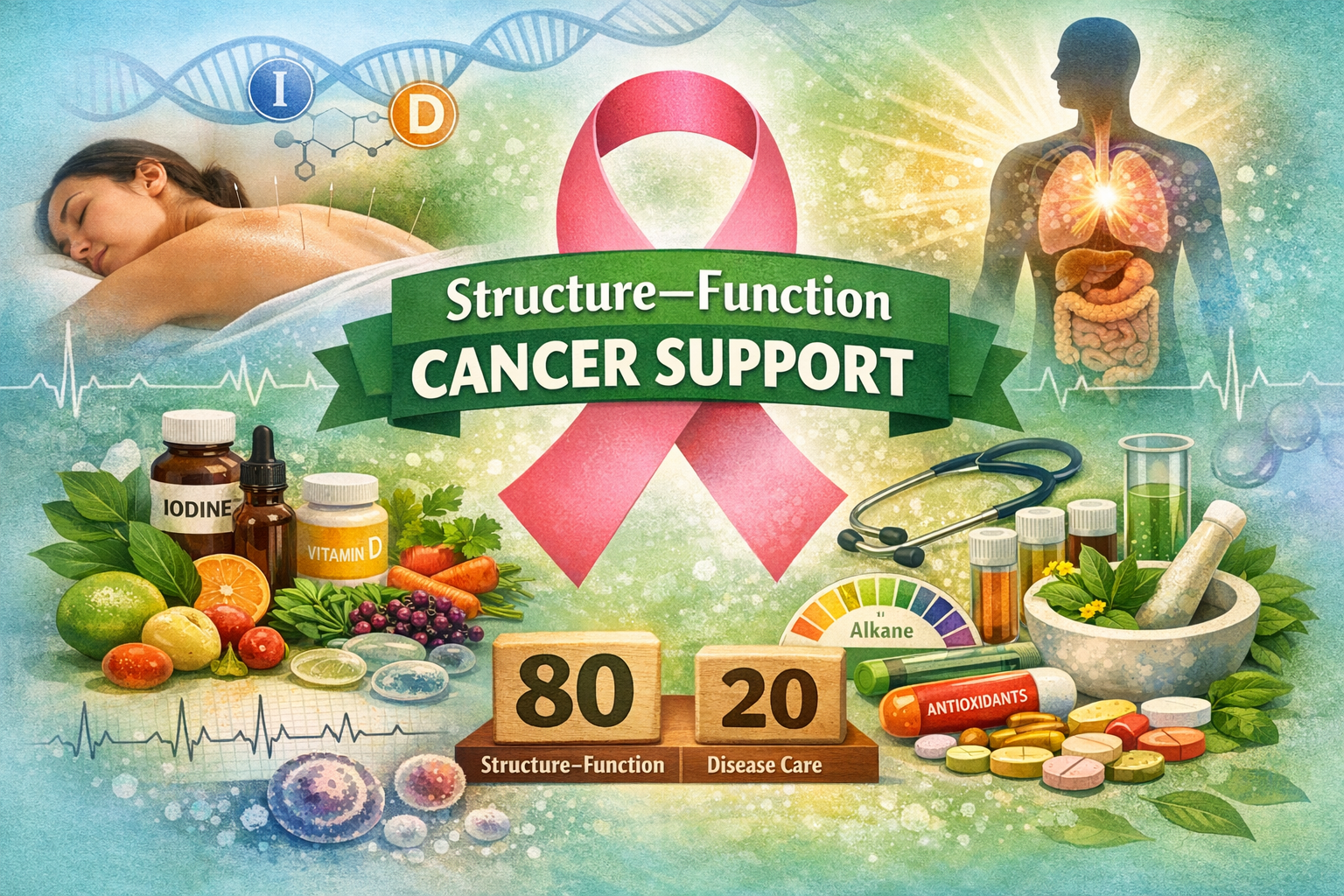
Cancer remains the second leading cause of death, and yet much of the conversation around cancer focuses almost exclusively on disease care—chemotherapy, radiation, surgery—without adequately addressing the state of the body itself.
At Holistic Integration, we approach cancer support through what we call Structure–Function Healthcare. This model does not replace oncology care. Instead, it focuses on restoring balance in the body so it can function as effectively as possible alongside conventional treatment.
This article summarizes Part Two of our four-part series on cancer, with a focus on treatment support, physiology, and restoring homeostasis.
What Is Structure–Function Healthcare?
Structure–Function Healthcare is based on a simple but powerful principle:
Structure affects function, and function affects structure.
Structural issues (misalignments, joint restrictions, posture)
Functional issues (nutrition, hormones, oxygenation, detoxification)
These systems are inseparable. Addressing one without the other often leads to incomplete or temporary results.
Health, in this model, is defined as homeostasis—a state where all systems are balanced and resilient.
Cancer and Loss of Homeostasis
The body naturally forms abnormal cells every day. Under normal conditions, those cells are identified and eliminated. Cancer develops when the body loses its ability to maintain balance.
Common contributors include:
Impaired oxygenation
Toxic burden (xenobiotics, heavy metals, chemicals)
pH imbalance
Nutrient and mineral deficiencies
Hormonal imbalance
Immune dysfunction
Structure–Function care does not treat cancer directly. Instead, it focuses on restoring the conditions that allow the body to regulate itself more effectively.
The 80/20 Principle in Cancer Care
We often describe care using an 80/20 framework:
80% Structure–Function care (supporting physiology, balance, resilience)
20% Disease care (oncology-directed treatment)
Modern healthcare often flips this ratio, which may help explain why the U.S. continues to lag in overall health outcomes despite advanced medical technology.
Key Therapeutic Foundations in Structure–Function Cancer Support
1. Iodine and Cellular Health
Iodine plays a foundational role in cellular communication and hormone balance.
Breast tissue and the thyroid have particularly high iodine requirements
Halides like bromide, fluoride, and chloride may compete with iodine and are associated with carcinogenic activity
Maintaining adequate iodine levels may support normal cellular function
Iodine status is assessed through blood testing, and individualized support is used rather than blanket supplementation.
2. Vitamin D as an Immune Modulator
Vitamin D functions more like a hormone than a vitamin.
It plays a major role in immune regulation
Low levels are extremely common, especially in northern climates
Adequate vitamin D levels may support immune surveillance and resilience
Vitamin D status should be tested and corrected as needed, particularly in individuals with a history of cancer.
3. pH Balance and Mineral Transport
Cancer cells behave differently from healthy cells at a biochemical level.
Cancer cells tend to maintain an abnormally alkaline internal environment
This can push acidity into surrounding tissues
Certain minerals help regulate intracellular pH and cellular signaling
Minerals such as magnesium, calcium, cesium, and rubidium—particularly in bioavailable forms—have been studied for their ability to cross cellular barriers and influence pH dynamics.
This is one reason mineral testing (blood and hair analysis) is central to structure–function evaluation.
4. Herbal Support: Detoxification and Immune Function
Herbs are not used as cancer treatments, but they may support two critical systems:
Detoxification pathways (especially liver and lymphatic support)
Immune modulation
Commonly utilized herbs include:
Mistletoe
Milk thistle
Berberine-containing plants
Aloe vera
Ruta graveolens
Traditional herbal formulas such as Essiac
Herbs are selected individually, based on testing and response rather than one-size-fits-all protocols.
5. Nutrient Deficiencies and Cancer Resilience
Cancer and cancer treatments place enormous metabolic stress on the body.
Key nutrients that are commonly evaluated include:
Vitamin A
B vitamins (especially B12 and folate)
Vitamin C
Iron and anemia markers
Zinc–copper balance
Essential minerals for mitochondrial energy production
Correcting deficiencies may improve oxygenation, immune response, and energy production, all of which are critical during cancer care.
6. Fiber and Detoxification
Fiber remains one of the most underappreciated tools in health.
Adequate fiber intake:
Supports toxin elimination
Improves hormone clearance
Feeds beneficial gut bacteria
May reduce cancer risk significantly
Fiber is foundational—not optional—in structure–function care.
7. Free Radicals and Oxidative Stress
Free radicals are a natural byproduct of energy production, but excess oxidative stress can damage DNA and cellular replication.
Antioxidants help neutralize free radicals
Balance is key—eliminating all oxidative activity is neither possible nor desirable
Nutrient sufficiency and mitochondrial support are essential
Interestingly, cholesterol itself helps buffer oxidative stress, which is why overly aggressive cholesterol reduction may have unintended consequences.
8. Cellular Energy and Phase Angle
Phase angle reflects the electromagnetic integrity of cells.
A higher phase angle is associated with better cellular resilience and energy
Lower phase angle is associated with fatigue, degeneration, and disease progression
Fatigue is often one of the most important clinical indicators in cancer support. When energy improves, outcomes often follow.
9. Acupuncture and Energy Flow
Acupuncture plays a unique role in cancer support by:
Improving energy flow
Reducing fatigue
Supporting autonomic balance
Research suggests that individuals receiving acupuncture during cancer care experience significantly fewer symptoms and improved quality of life.
10. Attitude, Stress, and Healing Capacity
Mental and emotional state directly influence physiology.
Chronic stress suppresses immune function
Positive engagement, laughter, sunlight, and enjoyment may improve immune markers
Mental resilience often correlates with better outcomes
Attitude does not replace treatment—but it clearly influences how the body responds.
The Goal: Supporting the Body’s Capacity to Heal
Structure–Function care does not claim to cure cancer. Instead, it focuses on:
Restoring balance
Supporting resilience
Improving energy and immune capacity
Enhancing quality of life
Complementing appropriate medical care
When the body is supported properly, it often demonstrates a capacity to do far more than expected.