Decompression Therapy: A Non-Surgical Solution for Back, Neck, and Joint Pain
Back pain, neck pain, sciatica, degenerative discs, and even knee problems can dramatically affect your quality of life. For many people, the next recommendation is medication, injections, or surgery. But what if there was another option?
Decompression therapy has become one of the most effective non-surgical treatments offered at Holistic Integration, helping patients reduce pain, improve mobility, and support the body's natural healing process.
What Is Decompression Therapy?
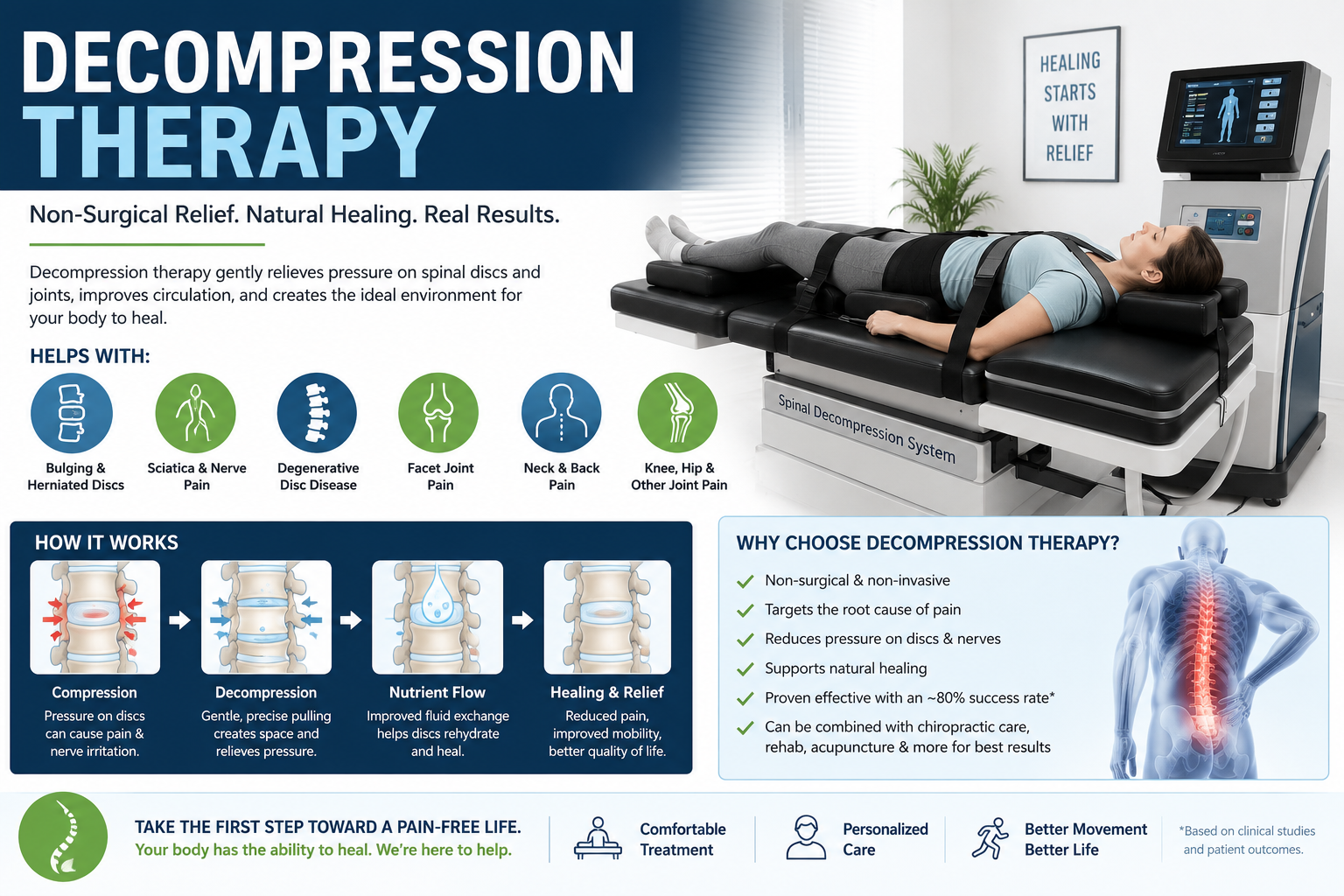
Decompression therapy is a computerized, non-surgical treatment designed to gently relieve pressure on spinal discs and joints. Unlike traditional traction, decompression uses a precise pulling-and-release motion that creates a pumping effect within the joints and discs.
This process helps:
Reduce pressure on nerves
Improve circulation of nutrients into damaged discs
Rehydrate spinal discs
Improve joint mobility
Support the healing of degenerative tissues
Dr. Robert Prather describes it as "unloading the disc" and giving it an opportunity to heal.
Understanding Disc Problems
Think of a spinal disc like a jelly-filled donut.
The outer layer is made of tough cartilage that holds a softer gel-like material inside. When the disc becomes injured or inflamed, the material can begin pushing outward.
Common disc conditions include:
Disc Bulge
A mild protrusion of the disc that may irritate nearby nerves.
Disc Protrusion
A more significant outward movement of the disc material.
Herniated Disc
A tear in the outer layer allows disc material to escape into the spinal canal.
While some severe herniations may require surgery, many bulging and protruding discs respond very well to decompression therapy.
Conditions That May Benefit From Decompression
Decompression therapy is commonly used for:
Chronic neck pain
Chronic low back pain
Sciatica
Degenerative disc disease
Bulging discs
Herniated discs
Facet joint irritation
Spinal stenosis
Numbness and tingling in the arms or legs
Certain cases of neuropathy
Many patients who have been told surgery is their only option discover that decompression may provide significant relief without going under the knife.
More Than Just Back Pain
One of the lesser-known benefits of decompression therapy is that it can also be used on other joints.
At Holistic Integration, decompression may be used for:
Knees
Hips
Ankles
Elbows
Thoracic spine (mid-back)
Patients with arthritis, degeneration, and chronic joint pain have experienced remarkable improvements through carefully applied decompression protocols.
How Decompression Helps Healing
One challenge with spinal discs is that they have a very limited blood supply.
Unlike muscles and many other tissues, discs rely heavily on fluid exchange to receive nutrients and remove waste products.
Dr. Clinton Dodge compares this to a "supply chain issue."
When discs become compressed, nutrient delivery slows down. The decompression table creates a gentle pumping action that:
Draws fluid into the disc
Improves nutrient exchange
Helps rehydrate tissues
Reduces inflammation
Supports tissue repair
This is why many patients notice not only pain relief but improved mobility and function as well.
Decompression vs. Inversion Tables
A common question is:
"Can't I just use an inversion table?"
The short answer is no.
While inversion tables use gravity to stretch the spine, decompression therapy is much more precise.
Inversion Tables:
Use body weight and gravity
Pull the entire spine equally
Can increase blood pressure
May aggravate some conditions
Decompression Therapy:
Uses computerized precision
Targets specific spinal levels
Creates a controlled pumping action
Adjusts angles based on the patient's condition
Reduces muscle guarding and spasms
The goal isn't simply to stretch the spine—it's to create the ideal environment for healing.
What Is a Treatment Like?
Most patients find decompression therapy surprisingly relaxing.
During treatment:
The patient lies comfortably on a padded decompression table.
A harness is secured around the body.
A computerized system applies precise pulling forces.
The table alternates between decompression and relaxation phases.
Sessions typically last around 20–30 minutes.
Many patients read, relax, or even fall asleep during treatment.
How Long Does It Take to Work?
Results vary depending on the condition and severity.
Many patients begin noticing changes within the first six treatments. More significant improvements often occur after approximately 20 sessions.
Research cited by Dr. Dodge shows decompression therapy has approximately an 80% success rate, making it one of the most effective conservative treatments available for many spinal conditions.
Some patients experience relief after only a few treatments, while others see steady improvement over several weeks.
Why Decompression Works Best as Part of a Complete Plan
One of Dr. Prather's key observations is that decompression should rarely be used as a standalone treatment.
The best outcomes typically occur when decompression is combined with:
Chiropractic Care
Correcting spinal misalignments allows decompression to work more effectively.
Rehabilitation Exercises
Strengthening weak muscles and improving posture helps maintain results.
Soft Tissue Therapy
Addressing fascial restrictions and muscle tension improves mobility and stability.
Acupuncture
May accelerate healing and reduce inflammation.
Nutritional Support
Providing the body with essential nutrients helps tissues repair more efficiently.
When these therapies work together, patients often achieve results that would be difficult with any single treatment alone.
Who Is a Candidate?
You may be a good candidate for decompression if you have:
Chronic neck or back pain
Disc degeneration
Bulging or herniated discs
Sciatica
Numbness or tingling in the extremities
Failed back surgery without implanted hardware
Knee or hip degeneration
Persistent joint pain lasting more than several weeks
A thorough evaluation, including imaging when necessary, helps determine whether decompression is appropriate for your specific condition.
The Bottom Line
Decompression therapy offers a gentle, non-surgical approach to relieving pain and supporting healing in the spine and joints. By reducing pressure, improving fluid exchange, and restoring movement, it helps create the conditions the body needs to repair itself.
For patients struggling with chronic pain, degeneration, or limited mobility, decompression therapy may provide the missing piece needed to regain function and improve quality of life.
Voice of Health Takeaway
Pain isn't always something you simply have to live with. Whether you're dealing with a bulging disc, sciatica, arthritis, or chronic joint pain, decompression therapy may help your body heal naturally—without surgery and with significantly less downtime.
By combining decompression with chiropractic care, rehabilitation, nutrition, and other supportive therapies, many patients are discovering a path back to movement, comfort, and vitality.