Stroke Prevention: The Habits That Could Save Your Life
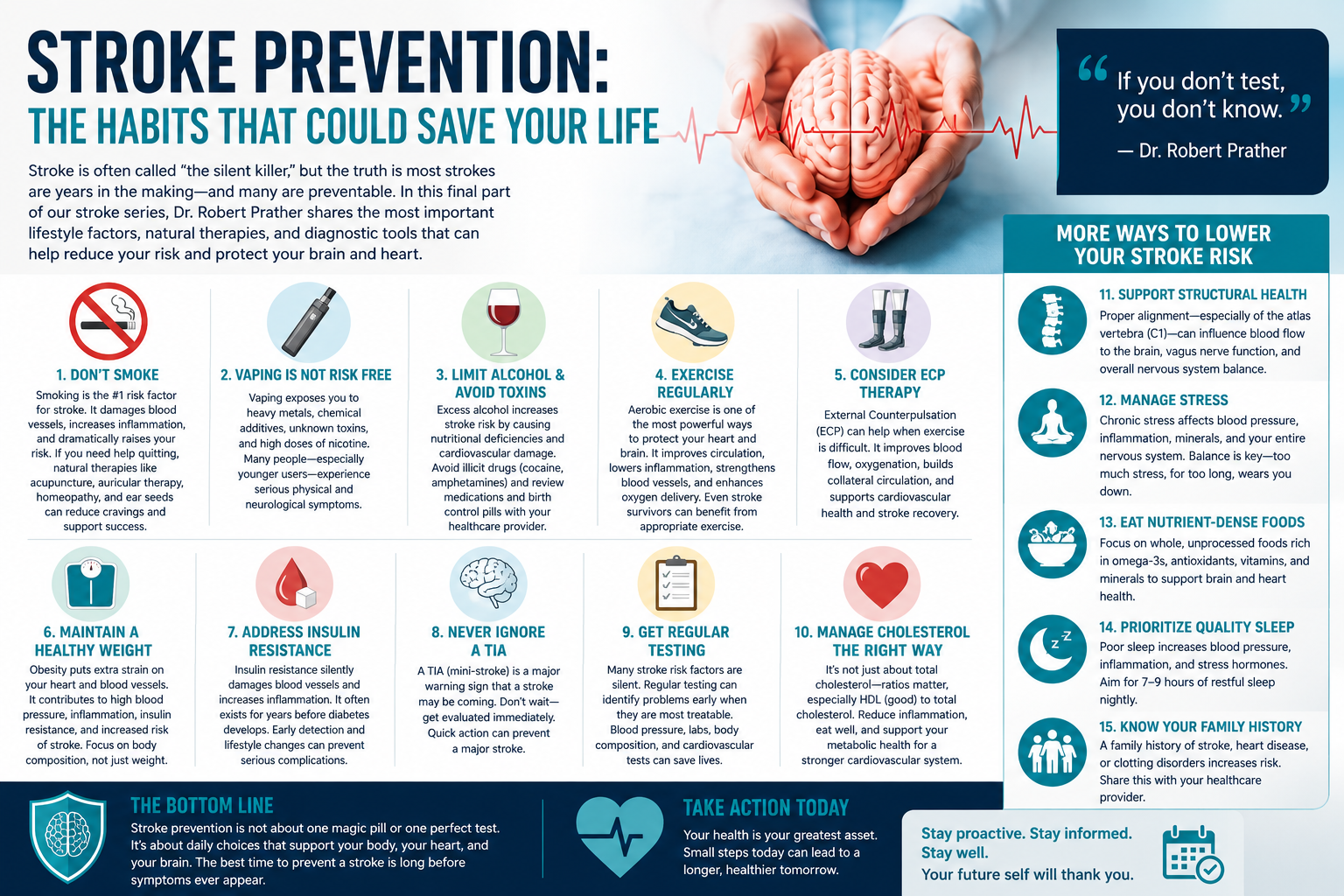
Stroke remains one of the leading causes of death and disability in the United States. While many people think of stroke as something that happens suddenly and without warning, the truth is that most strokes are years in the making. The encouraging news is that many of the biggest risk factors are preventable.
In this final installment of The Voice of Health's stroke series, Dr. Robert Prather discusses the most important lifestyle factors, diagnostic tools, and natural approaches that can help reduce stroke risk and improve overall cardiovascular health.
The Number One Step: Don't Smoke
If there is one habit that dramatically increases the risk of stroke, it is smoking.
Smoking damages blood vessels, increases inflammation, contributes to cardiovascular disease, and significantly raises stroke risk. The decline in smoking rates over the years has played a major role in reducing overall stroke incidence.
For those who want to quit but struggle with cravings, Dr. Prather highlights several natural support options, including:
Acupuncture
Auricular (ear) therapy
Homeopathic support
Ear seeds to help reduce cravings
These therapies are designed to address both the physical and neurological components of addiction.
Is Vaping Really Safer?
Many people assume vaping is a healthier alternative to smoking. Dr. Prather cautions that vaping carries its own serious concerns.
Because vaping products vary widely and are often poorly regulated, users may be exposed to:
Heavy metals
Chemical additives
Unknown toxins
High concentrations of nicotine
According to Dr. Prather, some patients—particularly younger individuals—have experienced significant physical and neurological symptoms after vaping.
Alcohol and Other Stroke Risk Factors
Excessive alcohol consumption is strongly associated with stroke risk.
Over time, alcohol contributes to nutritional deficiencies that affect cardiovascular health. Dr. Prather also notes that certain substances can significantly increase stroke risk, including:
Cocaine
Amphetamines
Certain prescription medications
Birth control pills in susceptible individuals
Understanding family history and discussing medication risks with healthcare providers can be an important part of stroke prevention.
Aerobic Exercise: One of the Most Powerful Preventive Tools
When discussing stroke prevention, exercise consistently rises to the top of the list.
According to Dr. Prather, aerobic exercise is one of the most effective interventions for improving cardiovascular health and reducing stroke risk.
Benefits include:
Improved circulation
Reduced inflammation
Better blood vessel function
Improved oxygen delivery
Enhanced cardiovascular endurance
Even individuals who have experienced a stroke may benefit significantly from appropriately designed exercise programs.
Understanding ECP Therapy
For individuals unable to exercise due to physical limitations, Dr. Prather discusses the potential benefits of External Counterpulsation (ECP).
ECP uses specialized cuffs around the legs and lower body to enhance blood flow and simulate some of the effects of aerobic exercise.
Potential benefits include:
Increased circulation
Improved oxygenation
Development of collateral blood vessels
Enhanced cardiovascular function
Stroke recovery support
Many patients report noticeable improvements in energy, cognition, and overall function after treatment.
Why Obesity Increases Stroke Risk
Obesity places additional stress on the cardiovascular system.
Excess body fat contributes to:
Higher blood pressure
Increased inflammation
Insulin resistance
Arterial damage
Greater cardiovascular strain
Dr. Prather emphasizes that body composition is often more important than body weight alone. Two people may weigh the same amount, but their body fat percentages can create vastly different health outcomes.
The Hidden Danger of Insulin Resistance
One of the most important yet overlooked contributors to stroke risk is insulin resistance.
When cells become resistant to insulin:
Blood sugar remains elevated
Inflammation increases
Blood vessel damage accelerates
Cardiovascular risk rises
Insulin resistance is often present years before Type 2 diabetes develops, making early detection especially valuable.
Never Ignore a TIA
A TIA, or Transient Ischemic Attack, is often referred to as a "mini-stroke."
Symptoms may temporarily resemble a stroke but then resolve. Because symptoms disappear, many people fail to seek medical attention.
That can be a dangerous mistake.
Dr. Prather emphasizes that a TIA may increase the risk of a future stroke dramatically and should always be treated as a serious warning sign.
The Importance of Regular Testing
Many stroke risk factors develop silently.
Regular health evaluations can identify concerns before a major event occurs.
Examples include:
Blood pressure monitoring
Inflammatory markers
Cholesterol ratios
Blood sugar assessments
Body composition analysis
Cardiovascular testing
As Dr. Prather often says:
"If you don't test, you don't know."
Cholesterol: It's About the Ratio
Contrary to popular belief, stroke risk isn't determined by total cholesterol alone.
Dr. Prather emphasizes the importance of cholesterol ratios, particularly the relationship between HDL ("good cholesterol") and total cholesterol.
Healthy cholesterol management involves:
Reducing inflammation
Supporting metabolic health
Improving nutrition
Maintaining proper cardiovascular function
Looking only at total cholesterol may fail to tell the complete story.
Structural Health and Stroke Prevention
One unique aspect of Dr. Prather's approach involves the relationship between structural alignment and cardiovascular function.
Particular attention is given to the atlas vertebra (C1), the top bone in the neck.
According to Dr. Prather, misalignment in this area may influence:
Blood pressure regulation
Vagus nerve function
Blood flow to the brain
Overall nervous system balance
Proper structural alignment can play an important role in maintaining healthy neurological and cardiovascular function.
Managing Stress Matters
Chronic stress affects nearly every system in the body.
Long-term stress can contribute to:
Elevated blood pressure
Mineral depletion
Increased inflammation
Nervous system imbalance
Greater cardiovascular strain
Dr. Prather teaches that health requires balance. While some stress is normal and even beneficial, spending too much time in a constant "fight-or-flight" state can negatively impact long-term health.
The Bottom Line
Stroke prevention is not about a single magic pill or a single perfect test. It is about creating an environment where the body can function optimally.
The fundamentals remain powerful:
Don't smoke or vape
Limit alcohol consumption
Exercise regularly
Maintain healthy body composition
Address insulin resistance
Monitor cardiovascular health
Manage stress
Stay proactive with testing
Support proper structural alignment
Address health concerns before they become crises
The best time to prevent a stroke is long before symptoms ever appear. By taking action today, you can dramatically improve your chances of maintaining a healthy brain, heart, and body for years to come.