Stroke Awareness: Understanding the Signs, Risks, and Prevention of CVAs
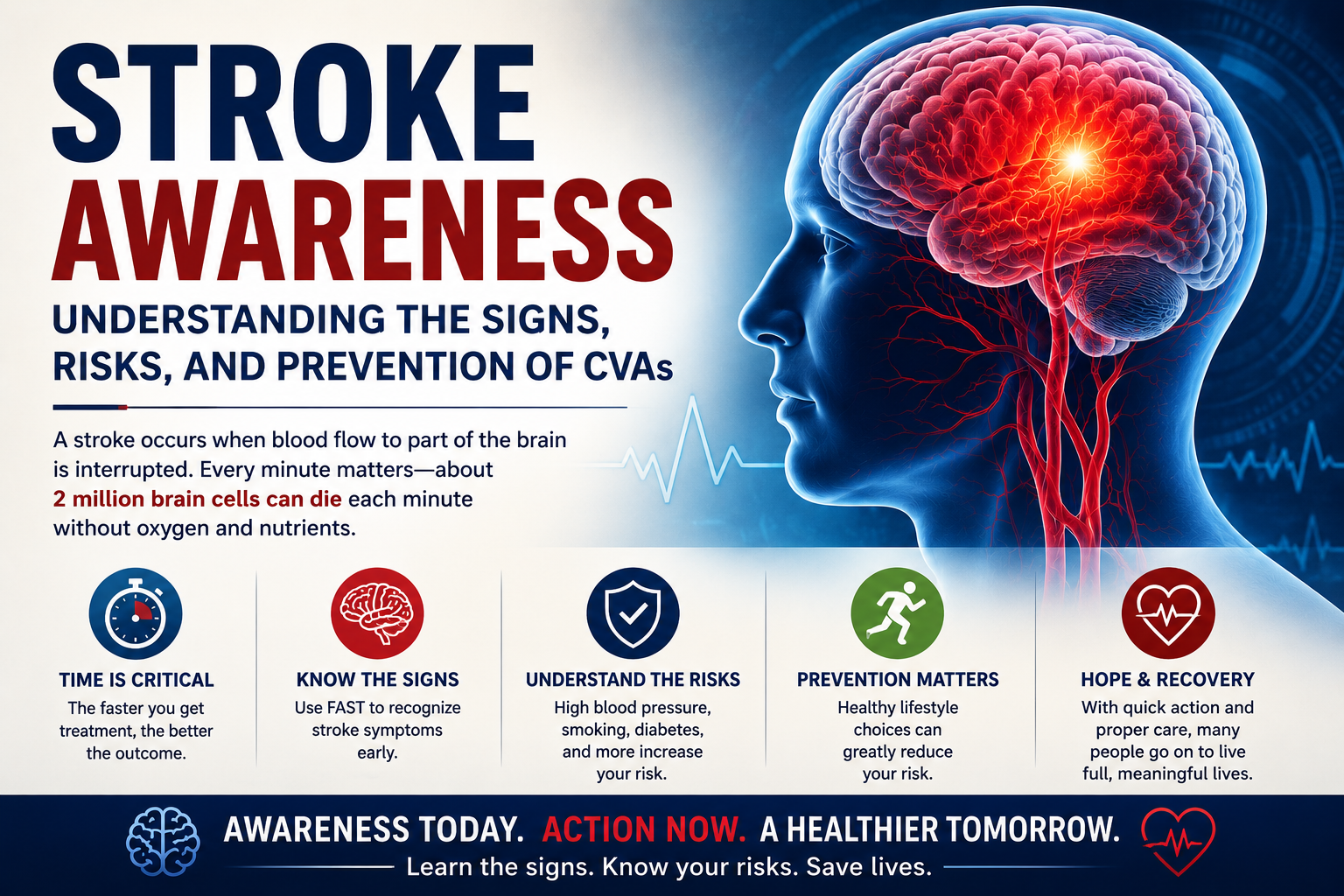
Stroke is one of the leading causes of death and long-term disability in the United States, yet many people still do not recognize the warning signs until it is too late. According to Dr. Robert Prather on The Voice of Health Podcast, stroke is the number four overall cause of death in the United States, ranking even higher for women.
In this episode of The Voice of Health, Dr. Prather and Lisa Prather discuss what strokes are, why rapid treatment matters, common risk factors, and the warning signs everyone should know.
What Is a Stroke?
A stroke, also called a Cerebrovascular Accident (CVA), occurs when blood flow to part of the brain is interrupted. When the brain loses oxygen and nutrients, brain cells begin to die very quickly. Dr. Prather explains that approximately 2 million brain cells can die every minute during a stroke.
Because different parts of the brain control different functions, the symptoms of a stroke depend on which area is affected. A stroke may impact:
Speech
Vision
Memory
Balance
Movement
Facial muscles
Cognition
Sensation
Some people lose the ability to speak, while others may experience weakness, confusion, or difficulty understanding language. About one-fourth of stroke survivors require speech rehabilitation afterward.
Why Time Matters
One of the most important messages from the episode is this:
Stroke is a medical emergency.
The faster someone receives treatment, the better the chances of reducing brain damage and improving recovery outcomes. Dr. Prather emphasizes that getting to the hospital within the first few hours can make a tremendous difference.
Unfortunately, many people delay treatment because they are unsure whether they are truly having a stroke. Only about 38% of people recognize the symptoms while they are occurring.
Even temporary symptoms should never be ignored.
The FAST Method: How to Recognize a Stroke
One of the easiest ways to recognize a possible stroke is by remembering the acronym:
FAST
F — Face
Ask the person to smile.
Does one side of the face droop or appear uneven?
A — Arms
Ask the person to raise both arms.
Does one arm drift downward or fail to lift properly?
S — Speech
Ask the person to repeat a simple sentence.
Is their speech slurred, confused, or difficult to understand?
T — Time
If any of these signs are present, call 911 immediately.
Time is critical.
Dr. Prather also explains that stroke symptoms may include:
Sudden confusion
Vision changes
Numbness or tingling
Loss of balance
Hearing changes
Memory loss
Sudden weakness
Seizures
Loss of consciousness
Essentially, any sudden change involving brain function should be taken seriously.
The Three Main Types of Stroke
Not all strokes are the same. Treatment depends on identifying the type of stroke occurring.
1. Thrombotic Stroke
This is the most common type.
A thrombotic stroke occurs when plaque buildup narrows the arteries and a blood clot blocks blood flow in the brain. This is closely related to atherosclerosis and cardiovascular disease.
2. Embolic Stroke
An embolic stroke occurs when a clot forms elsewhere in the body — often the heart — and travels to the brain.
Atrial fibrillation (AFib) is a common cause of embolic stroke. Valve infections and certain heart conditions may also increase risk.
3. Hemorrhagic Stroke
A hemorrhagic stroke occurs when a blood vessel ruptures and bleeds into the brain.
This type is often associated with:
High blood pressure
Weak arterial walls
Aneurysms
Structural vascular abnormalities
These strokes are especially dangerous because bleeding increases pressure inside the brain.
What Is a TIA?
Dr. Prather also discusses Transient Ischemic Attacks (TIAs), sometimes called “mini-strokes.”
A TIA occurs when blood flow is temporarily interrupted but then restored before permanent damage occurs. Symptoms may only last a few minutes and disappear completely.
However, TIAs should never be ignored.
They are often an early warning sign that a major stroke may be coming. The more TIAs someone experiences, the higher the future stroke risk becomes.
Common Stroke Risk Factors
Dr. Prather explains that stroke risk is influenced by both genetics and lifestyle factors.
Some major risk factors include:
High blood pressure
Smoking
Diabetes
Obesity
Excess alcohol use
Drug use (especially cocaine and amphetamines)
Poor nutrition
Cardiovascular disease
AFib
Chronic inflammation
Family history of stroke
Smoking and the “Stroke Belt”
Smoking is one of the biggest contributors to stroke risk.
According to Dr. Prather, smoking increases oxidative stress and free radical damage throughout the arteries, accelerating vascular aging and plaque formation.
He also references the “Stroke Belt” in the United States — regions where stroke incidence is significantly higher and where smoking rates are also elevated.
Nutrition and Stroke Prevention
One of the recurring themes throughout the episode is that nutritional deficiencies may contribute significantly to stroke risk.
Dr. Prather discusses several important nutritional factors, including:
Vitamin D
Copper
Zinc
Magnesium
Antioxidants
Blood sugar regulation
He particularly highlights the importance of proper testing rather than blindly supplementing nutrients.
For example, vitamin D deficiency is common and may contribute to cardiovascular and vascular issues, but excessive vitamin D supplementation without monitoring can also create problems.
The Role of Inflammation
Inflammation plays a major role in stroke development.
Dr. Prather explains that smoking, blood sugar imbalances, insulin resistance, and free radical damage can all injure the delicate endothelial lining of blood vessels.
Over time, this vascular damage contributes to:
Plaque formation
Arterial stiffness
High blood pressure
Blood clot formation
Increased stroke risk
This is why prevention often focuses on improving overall cardiovascular and metabolic health.
Chiropractic and the Nervous System
The episode also discusses the relationship between the nervous system and circulation.
Dr. Prather explains that the upper cervical spine — particularly the atlas vertebra — may influence blood flow and nervous system regulation.
The vertebral arteries travel through this region and supply blood to the brain. According to Dr. Prather, improving structural alignment and nervous system balance may support circulation and reduce stress on the vascular system.
Prevention Matters
Many strokes are preventable.
The episode repeatedly emphasizes the importance of proactive healthcare and identifying risk factors before a crisis occurs.
Prevention strategies include:
Controlling blood pressure
Managing blood sugar
Avoiding smoking
Limiting alcohol
Exercising appropriately
Supporting cardiovascular health
Improving nutrition
Reducing inflammation
Monitoring vascular health
Final Thoughts
Stroke is not something that only affects older adults. While risk increases with age, strokes can happen at virtually any stage of life.
Recognizing the signs early and responding quickly can save brain function — and save lives.
Remember the acronym:
FAST
Face
Arms
Speech
Time
If you suspect a stroke, call 911 immediately.
The faster the treatment begins, the better the outcome may be.