Craniosacral Therapy: Supporting the Nervous System Through Gentle, Restorative Care
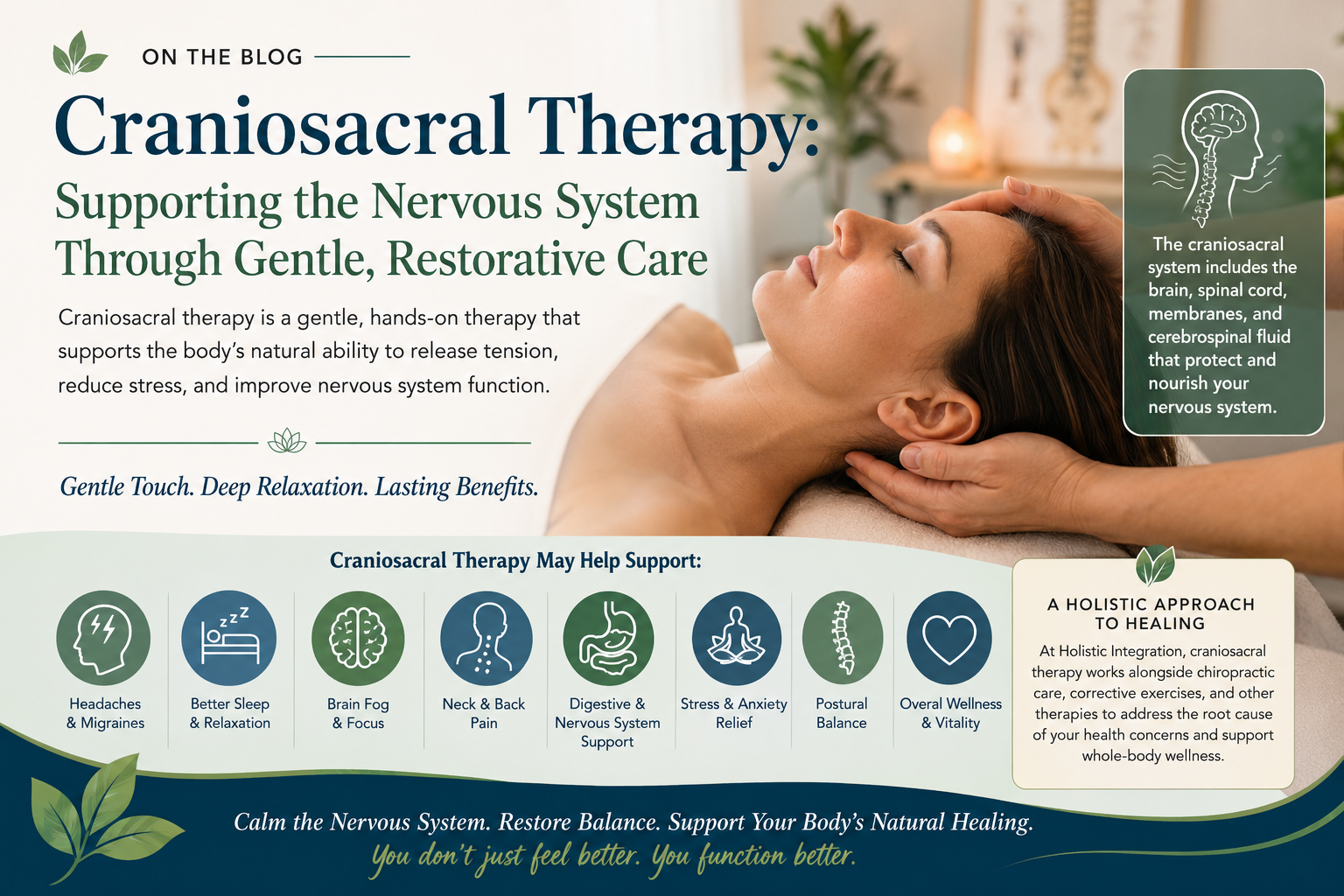
Craniosacral therapy is a gentle, hands-on therapy designed to evaluate and support the craniosacral system, which includes the brain, spinal cord, the membranes surrounding them, and the cerebrospinal fluid that flows within those membranes.
At Holistic Integration, craniosacral therapy has become an important part of our structure-function approach because of its connection to the nervous system, stress response, posture, pain, sleep, and overall wellness.
What Is the Craniosacral System?
The craniosacral system is a semi-closed hydraulic system that helps produce, circulate, and reabsorb cerebrospinal fluid. This fluid surrounds the brain and spinal cord, helping to cushion the nervous system, support nutrient delivery, regulate temperature, assist detoxification, and contribute to healthy nervous system function.
This system has a natural rhythm, similar to how the body has a heartbeat and respiratory rhythm. Practitioners trained in craniosacral therapy learn to feel this subtle rhythm throughout the body and evaluate whether it feels balanced, restricted, or uneven.
When the rhythm is not moving as well as it should, it may contribute to tension, discomfort, or nervous system dysfunction.
Why Cerebrospinal Fluid Matters
Cerebrospinal fluid plays an important role in the health of the central nervous system. It helps “float” and cushion the brain, supports the spinal cord, and may influence how well the nervous system repairs, regulates, and communicates.
Dr. Prather explains that cerebrospinal fluid flow is one of the key areas evaluated under the Energy Flow pillar of health. When this flow is restricted, patients may experience symptoms such as headaches, migraines, TMJ issues, brain fog, attention struggles, sleep problems, tension, or general nervous system stress.
This is one reason movement, posture, breathing, and proper structural alignment matter so much. Sitting for long periods, holding tension, poor breathing patterns, stress, or prior injuries may all impact how freely the body moves and regulates.
What Does Craniosacral Therapy Feel Like?
A craniosacral therapy session is very gentle. The patient remains fully clothed and lies on a treatment table in a relaxing environment. The practitioner uses light touch at different areas of the body, often beginning at the feet and working upward toward the head.
During the evaluation, the practitioner is looking for:
Rate of rhythm
Amplitude or strength of movement
Symmetry between the right and left sides
Quality and smoothness of motion
The treatment may include light myofascial release, gentle work around the base of the skull, and techniques designed to support the natural movement of the craniosacral system.
Many patients describe the experience as deeply relaxing. Some feel warmth, heaviness, subtle movement, emotional release, or a meditative state. Others simply notice they feel calmer, lighter, or more aware of where they were holding tension.
Craniosacral Therapy and the Stress Response
One of the major themes of this episode is how many people are stuck in a sympathetic, fight-or-flight state. When the body is under chronic stress, digestion, immune function, sleep, hormone balance, and nervous system regulation may all be affected.
Craniosacral therapy may help the body shift toward a parasympathetic, rest-and-digest state. This is the state where the body can better repair, restore, and regulate.
Patients often report:
Deep relaxation
Reduced muscle tension
Improved body awareness
Better sleep
A calmer nervous system
Greater awareness of emotional or physical holding patterns
Feeling “more like themselves.”
Conditions Craniosacral Therapy May Support
Craniosacral therapy may be helpful as part of a broader care plan for people dealing with:
Migraines or headaches
Neck and low back pain
TMJ issues
Sleep problems
Brain fog or attention issues
Stress and anxiety symptoms
Digestive concerns connected to nervous system stress
Vagal nerve dysfunction
Postural tension
General nervous system imbalance
As always, each patient should be evaluated individually to determine whether this therapy is appropriate for them.
When Craniosacral Therapy May Not Be Appropriate
Craniosacral therapy is generally gentle, but it may not be appropriate for someone with acute or serious conditions involving increased intracranial pressure, such as an acute stroke, hemorrhage, aneurysm, skull fracture, cerebrospinal fluid leak, or significant head injury.
In those cases, emergency medical care or proper stabilization comes first.
How Craniosacral Therapy Works With Chiropractic Care
Craniosacral therapy and chiropractic care are closely connected because both involve the structure and function of the nervous system.
Dr. Dodge explains that upper cervical work, including Atlas Orthogonal care, can influence cerebrospinal fluid flow because the dura, the membrane surrounding the brain and spinal cord, has important attachments from the skull down to the sacrum.
The cranium, atlas, sacrum, cervical muscles, posture, and breathing all play a role in how well the nervous system can move and regulate.
This is why Holistic Integration combines structural care, chiropractic, craniosacral therapy, corrective exercise, mobilization, and other therapies to support the whole body.
A Patient Story: Suleiman’s Experience
Suleiman, a patient at Holistic Integration, shared that he originally came in with neuropathy, digestive issues, vascular concerns, and a sense that he was not getting the full care he needed elsewhere.
After beginning care at Holistic Integration, he received support for minerals, digestion, structural concerns, and other underlying issues. When craniosacral therapy was added, he noticed it helped “boost” the other therapies and helped his body settle into a more relaxed, aligned state.
He described the first session as unique and even a little awkward because the touch was so subtle. But over time, he noticed he was able to relax more quickly during each session. He also became more aware of how his body held stress, tension, and emotional patterns.
For him, craniosacral therapy became a freeing experience that helped him better understand his body and support his healing process.
The Takeaway
Craniosacral therapy is a gentle yet powerful way to support the nervous system, encourage relaxation, and help the body become more aware of where it holds tension.
Because the nervous system influences so many areas of health, supporting cerebrospinal fluid flow and improving the body’s ability to shift out of fight-or-flight may help people feel calmer, sleep better, move better, and function better.
At Holistic Integration, craniosacral therapy is one more way we help patients get to the root cause of their health concerns through a comprehensive structure-function approach.