Motor Vehicle Accidents: The Hidden Risks & How to Stay Safe
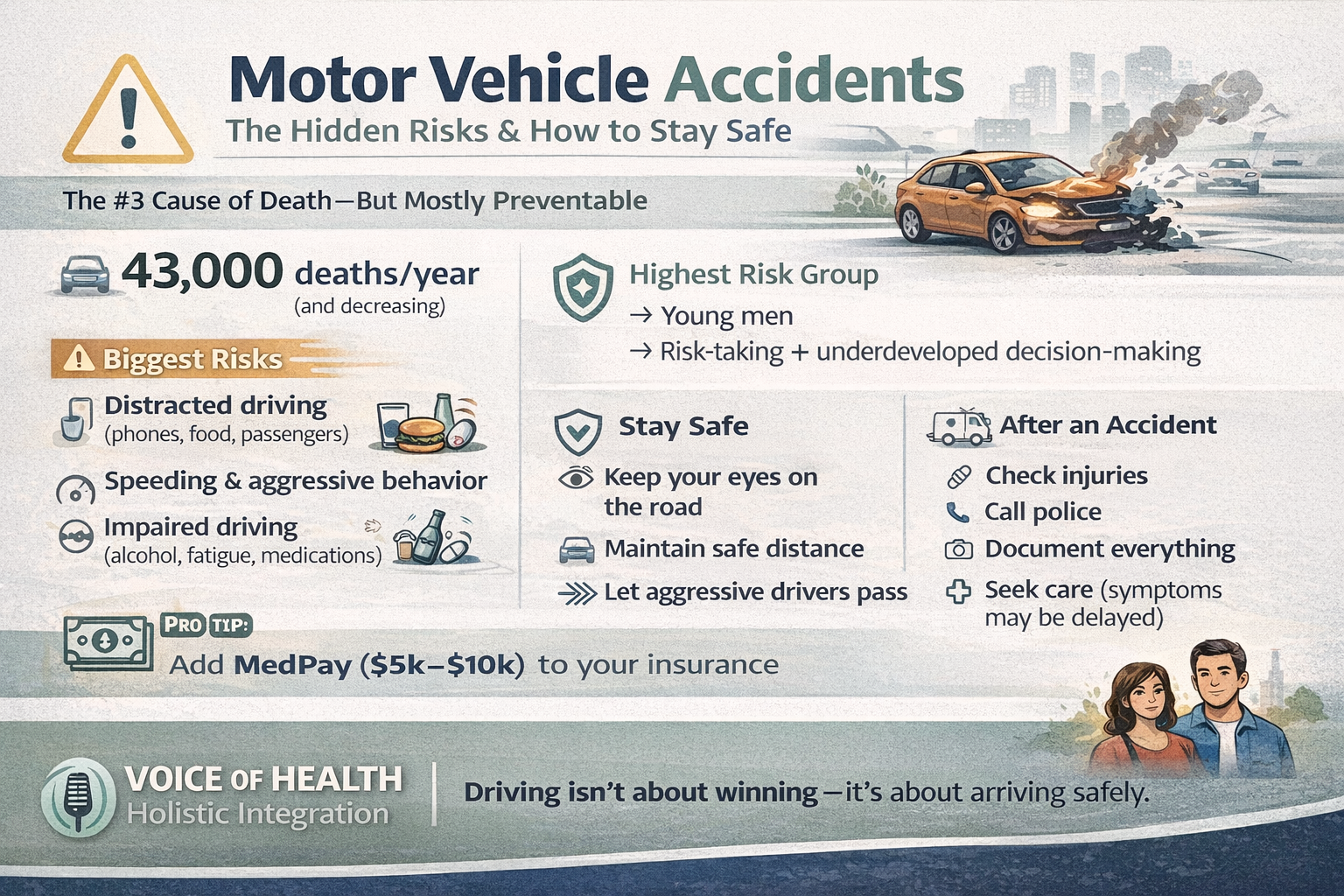
Motor vehicle accidents remain one of the leading causes of death in the United States, yet there’s good news: the numbers are improving.
In this final installment of our four-part series, we’re taking a closer look at:
Why motor vehicle deaths are declining
Who is most at risk
The biggest dangers on the road today
And how can you protect yourself and your family
Are Motor Vehicle Deaths Decreasing?
Yes - and that’s a major win.
According to recent data, approximately 43,000 people die each year in motor vehicle accidents. However, that number has been trending downward in recent years.
Why the improvement?
Safer vehicles (airbags, sensors, automatic braking)
Better road design (roundabouts, improved traffic flow)
Increased safety awareness (seatbelts, regulations)
Advanced technology (lane assist, collision warnings)
Modern cars are now designed not just to prevent accidents—but to protect you if one happens.
Who Is Most at Risk?
The highest-risk group?
Young men
Why?
Underdeveloped decision-making (frontal lobe development)
Greater risk-taking behavior
Higher likelihood of speeding and aggressive driving
This group is far more likely to treat driving as a competition rather than a responsibility—something that can have deadly consequences.
The Biggest Danger: Distraction
One of the most important takeaways:
Your main job when driving is driving.
Distractions come in many forms:
Phones (even hands-free can reduce focus)
Eating while driving
Loud music
Passengers (especially for younger drivers)
Even something as small as dropping food can take your eyes off the road—and that’s all it takes.
Defensive Driving Saves Lives
Driving isn’t about winning—it’s about arriving safely.
Key defensive driving habits:
Maintain a safe following distance
Let aggressive drivers pass
Avoid road rage or competition
Stay aware of your surroundings
“Cars are dangerous tools—they should never be used to prove anything.”
The Truth About Impaired Driving
Driving under the influence isn’t just about alcohol.
Impairment can come from:
Alcohol (even small amounts)
Prescription medications
Fatigue
Cognitive impairment
Good news: Services like Uber and Lyft have made it easier than ever to avoid risky decisions.
There’s simply no excuse anymore—plan ahead and stay safe.
What To Do After an Accident
Accidents happen fast, and in the moment, it’s easy to react incorrectly.
Here’s what to do:
Step-by-Step:
Check for injuries (yourself and others)
Stay calm and avoid admitting fault
Call the police
Take photos of vehicles and the scene
Exchange insurance information
Move to a safe location if possible
Important:
You may not feel injuries right away. Symptoms can appear hours—or even days—later.
Do You Have the Right Insurance?
One critical recommendation:
Get MedPay coverage
Minimum: $5,000
Ideal: $10,000
This helps cover immediate medical care regardless of fault—something many people overlook.
Also:
Research insurance companies
Check complaint records
Don’t just choose the cheapest option
A Final Thought: Driving Is a Responsibility
While technology has made driving safer than ever, human behavior still plays the biggest role.
The difference between safety and tragedy often comes down to:
Focus
Patience
Awareness
Good decision-making
Stay Safe, Stay Aware
Motor vehicle accidents may be decreasing, but they are still a leading cause of death.
By making small, intentional choices:
Avoid distractions
Drive defensively
Never drive impaired
You dramatically reduce your risk—and protect everyone else on the road.