Hip Pain & Mobility: How to Protect Your Hips and Avoid Unnecessary Surgery
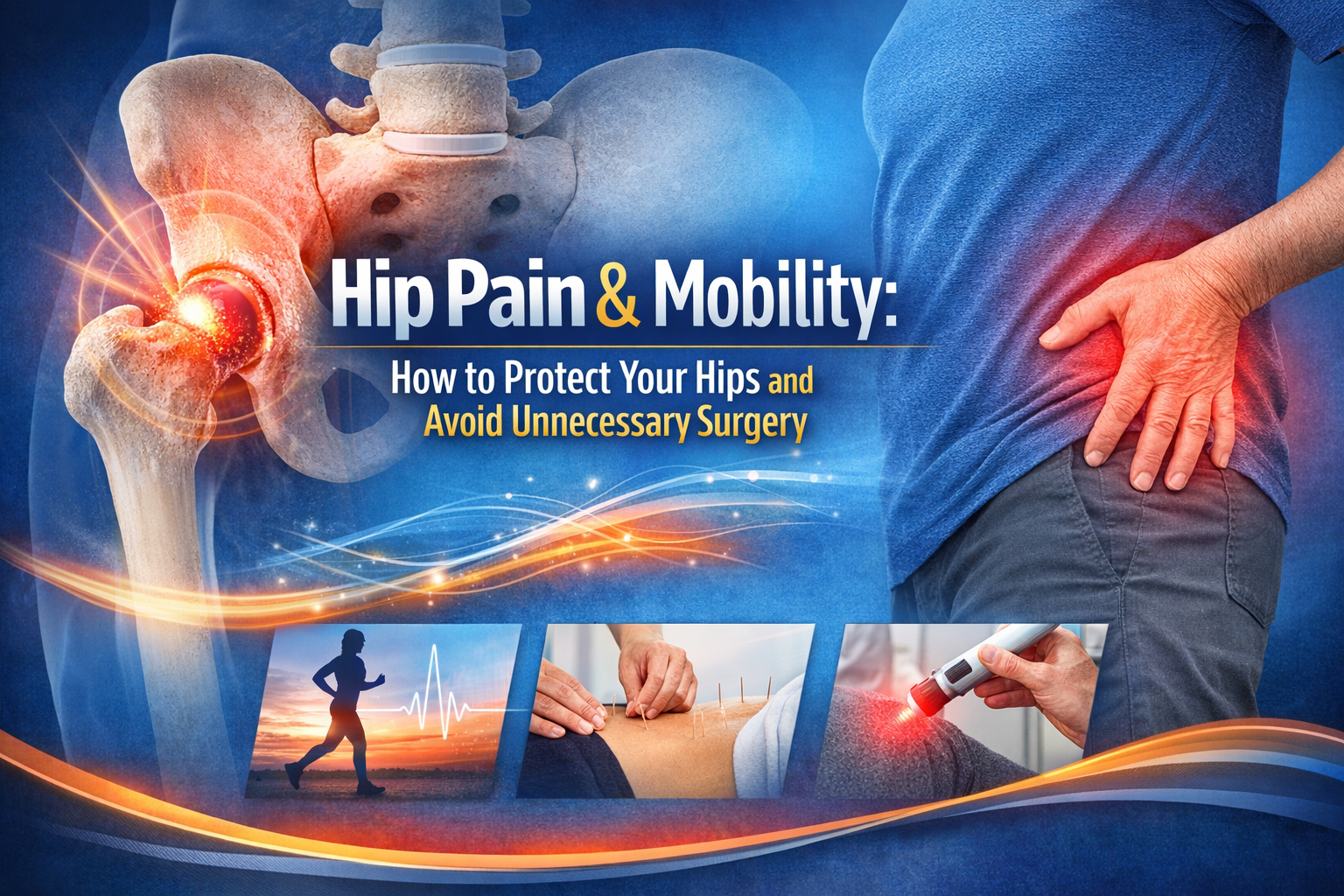
Hip pain can sneak up slowly—or show up suddenly and stop you in your tracks. Either way, it’s one of the most common issues we see affecting walking, sleeping, exercise, and overall quality of life.
On a recent episode of The Voice of Health, host Lisa Prather and Dr. Robert Prather (Holistic Integration) unpacked the real reasons hips break down, why so many people end up with replacements, and what a root-cause approach can do to restore mobility and relieve pain, often without rushing straight to medication or surgery.
And yes… the episode begins with an important question: why does the word “hip” make Lisa think of Elvis Presley? (We’ll never know. But it does lighten the mood before we dive into a serious topic.)
How Common Are Hip Replacements?
Hip replacements are more common than most people realize.
Dr. Prather shared that there are about 450,000 hip replacements per year, and that number is growing about 10% annually. Knees are even higher, with roughly 650,000 knee replacements each year.
Those numbers matter because they reflect something bigger: hip degeneration is becoming increasingly common, and many people don’t realize what’s happening until pain or stiffness forces their hand.
The #1 Cause of Hip Replacements: Osteoarthritis
The most common reason people end up needing a hip replacement is osteoarthritis, the classic “wear and tear” joint degeneration.
Dr. Prather explained that:
Roughly 40 million Americans currently have osteoarthritis.
Once you’re over 50, up to 80% of people show signs of osteoarthritis.
It tends to begin earlier in men, but women outnumber men as they age.
What is osteoarthritis?
Osteoarthritis is essentially the breakdown of cartilage and supportive joint tissue. It’s influenced by:
Chronic inflammation
Past injuries
Mechanical stress over time
Poor nutrition and depleted repair resources
It isn’t just aging—it’s the body losing its ability to maintain and repair joint tissue at the pace it’s being worn down.
Symptoms: It’s Not Just Pain
Pain is the symptom people notice most—but it’s not always the first sign.
Dr. Prather noted something surprising: some people can have severe osteoarthritis with very little pain, but they’ll show:
Reduced mobility
Stiffness
“Creaky” movement
Abnormal gait or compensation
Clicking/popping/grinding sensations (sometimes entertaining, sometimes concerning)
Lisa shared the reality many people relate to: “I’m getting up a little slower than years ago… but I’m still getting up and down.” And honestly, chasing grandkids is a pretty effective mobility program.
Osteoarthritis pain behaves differently
A key point from the episode:
Acute injuries often hurt more the more you use them.
Osteoarthritis often hurts more when you haven’t moved, then you try to get up, and everything protests.
That’s why movement matters so much: joints depend on motion to circulate nutrients and lubrication.
Other Causes of Hip Pain (Not Just Arthritis)
Not all hip pain is osteoarthritis. Dr. Prather highlighted several other common causes, including:
Bursitis (a different injury pattern with a different treatment approach)
Muscle strains or imbalances
Nerve impingements
Biomechanical issues from the feet, pelvis, or spine
The takeaway: you need to know what you’re treating before creating a plan. At Holistic Integration, the approach is to identify the root cause first, then build the plan.
The “Disease-Care” Approach: Why It Often Leads to Surgery
Dr. Prather described what most people experience in the conventional model:
Medication, most commonly NSAIDs (non-steroidal anti-inflammatories)
When that stops working → joint replacement
The NSAID issue
NSAIDs can reduce pain temporarily, but Dr. Prather emphasized a major downside for long-term use: they may contribute to cartilage breakdown and accelerated degeneration.
His guidance from the conversation:
Short-term use (2–3 weeks) can make sense for acute issues.
Chronic use for chronic arthritis often becomes a problem because it may relieve symptoms while worsening the underlying joint integrity.
Hip replacements can help—but they’re still a tradeoff
Hip replacements have improved dramatically, and many patients report high satisfaction. But Dr. Prather noted that replacement still represents:
A permanent structural change
Risks (infection, blood clots, etc.)
A small percentage of outcomes that worsen function
A “you’ll never be the same as your original hip” reality
Even orthopedic surgeons commonly agree:
If you can avoid replacement by restoring function earlier, you’re better off.
The Structure-Function Approach: Restore Balance, Restore Mobility
Holistic Integration uses a structure-function model focused on homeostasis—the body’s internal balance.
This model addresses:
Structural alignment (pelvis, spine, gait, leg length dynamics)
Functional repair capacity (nutrients, inflammation control, joint regeneration)
Whole-body contributors (gut health, liver stress, toxins, infections)
In Dr. Prather’s words, homeostasis is the definition of health, and the goal is to restore balance so the joint can repair rather than deteriorate.
What Natural Supports Help Joint Health?
The episode covered several categories that can support joints long-term—especially compared to symptom-only approaches.
1) Joint-building nutrients
Dr. Prather discussed how research and clinical experience have supported ingredients like:
Glucosamine (a key building block that supports cartilage and inflammation modulation)
Chondroitin
Hyaluronic acid (supports joint cushioning and lubrication)
He also shared that Holistic Integration uses targeted formulas and tests to find what works best for each individual rather than guessing.
2) Vitamins for repair
Key vitamins mentioned:
B vitamins (especially B3)
Vitamins A, E, and K
Vitamin C (critical for regeneration and repair processes)
3) Minerals matter (and copper is a standout)
Dr. Prather listed:
Zinc
Copper
Calcium
Magnesium
He highlighted copper as especially important for joint health and explained why some people historically used copper bracelets.
4) Herbal support for inflammation and oxidative stress
Herbals discussed included:
Boswellia
Curcumin
Ginger
Garlic
Pine bark
Grape seed extract
Why Structure is Everything: Pelvis, Gait, and “Functional Leg Length”
One of the most important structural insights from this episode:
Most people have some form of functional imbalance affecting the hip.
Dr. Prather shared that studies suggest around 80% of people show a leg-length discrepancy when assessed lying down (not necessarily true bone length difference, but a functional imbalance). That kind of imbalance can:
Multiply pressure through the hip joint
Accelerate wear
Create compensation patterns in the knees, back, and feet
That’s why chiropractic care, corrective exercise, gait evaluation, and orthotics can be so important.
Start at the feet
Abnormal gait often begins with the feet. Poor foot mechanics can travel upward and affect:
Knees
Hips
Pelvis
Low back
Orthotics can be a major “first domino” in restoring gait.
Powerful Therapies for Hip Pain and Mobility
Holistic Integration’s approach combines multiple therapies that work together:
Chiropractic adjustments (restore pelvic/hip alignment)
Corrective exercise & rehab (stabilize and retrain movement)
Acupuncture & dry needling
Acupuncture supports inflammation reduction and the healing response
Dry needling targets trigger points and muscle dysfunction
Decompression therapy (a pumping action to hydrate and nourish joints)
Supportive modalities (ultrasound, electrical stim, diathermy, Rapid Release therapy)
Lisa emphasized how decompression helped her personally—sometimes resolving pain quickly when combined with alignment work.
Liniments: An Underrated Tool for Flare-Ups
Liniments were another practical highlight. Dr. Prather described using several types—including traditional Chinese liniments—and testing which one works best for each person.
For many patients, topical support can become a reliable at-home tool when flare-ups happen.
When Should You Get Hip Pain Checked?
Dr. Prather’s general guideline from the show:
If hip pain lasts more than 4 weeks, it’s time for a proper evaluation.
Early intervention matters because prevention works best—and often, degeneration is detectable before severe symptoms begin.
What Should a Proper Hip Evaluation Include?
A thorough hip evaluation may include:
A detailed physical exam
Imaging (often starting with X-ray for joint integrity)
Blood work (inflammation, autoimmune markers, nutrient status)
Hair analysis (tissue minerals, heavy metals)
Gut testing (infections, inflammation, absorption issues)
Dr. Prather emphasized that internal issues can drive hip degeneration, including liver stress, inflammatory burden, toxins, and gut infections—because the hip joint can become a “downstream” place where systemic inflammation shows up.
Bottom Line: More Mobility, Less Guessing
Hip pain is common—but it doesn’t have to be a straight path to NSAIDs and surgery.
A structure-function approach looks at:
What’s breaking the joint down
What’s preventing it from repairing
What structural imbalances are multiplying pressure
What the body needs to restore homeostasis
If you’re dealing with hip pain, stiffness, or reduced mobility, the best next step is a clear diagnosis and a plan that builds the body back up—not just one that temporarily quiets symptoms.