Cancer Prevention: The Habits That Matter Most (and Where to Start)
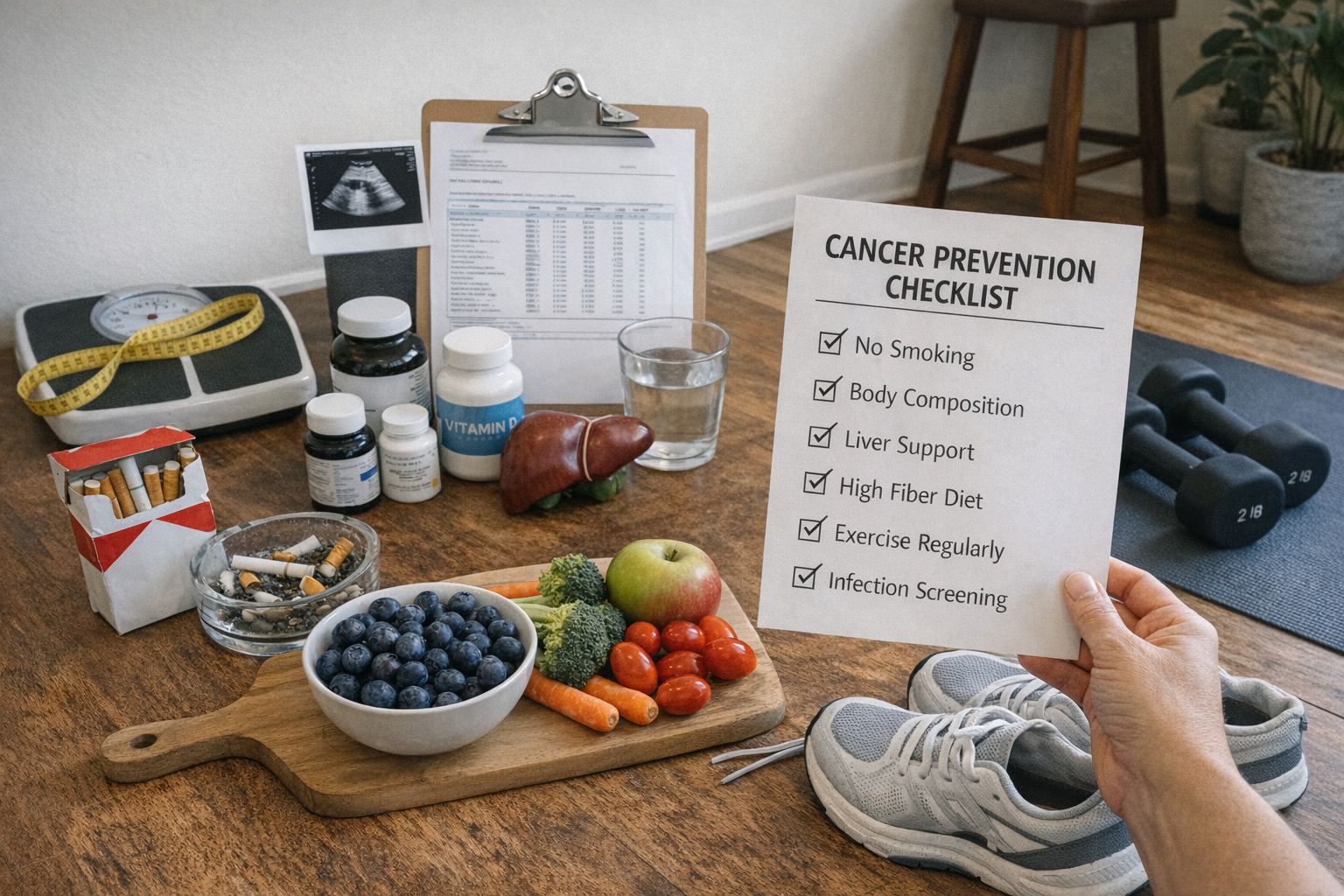
Cancer remains the #2 cause of death in the United States, and while some risk is outside our control, a large portion of prevention is connected to everyday choices and exposures. In the final episode of our four-part cancer series, Dr. Prather and Lisa focus on the biggest “levers” people can pull—starting with the most impactful habit of all.
Below is a clear, practical recap of the conversation, with takeaways you can apply immediately.
1) The #1 Preventable Cancer Risk: Cigarette Smoking
When asked what single habit change can most reduce cancer risk, Dr. Prather doesn’t hesitate:
Cigarette smoking.
Smoking has long been associated with lung cancer, but it’s also linked to cancers of the bladder, kidney, and more. The encouraging news is that population-level change can move the needle: Dr. Prather notes that cancer death trends began turning around in the early 1990s, aligning with large-scale efforts to reduce smoking.
Secondhand smoke matters—even more than people think
One of the most striking points in the discussion: secondhand smoke can expose non-smokers to a surprisingly high toxin load. Dr. Prather describes scenarios where bystanders can test with higher concentrations of certain toxins than the smokers themselves—an argument for taking smoke exposure seriously in shared spaces.
A note on vaping and inhaled products
The conversation also highlights concerns that inhaling chemicals—whether from cigarettes, vaping devices, or other smoked materials—can introduce toxic exposures (including potential heavy metals from device components). The simplest prevention principle here is: the lungs were designed for air, not chemical mixtures.
2) Helping People Quit: A “Step-Down” Strategy + Targeted Support
Quitting is difficult, and the approach at Holistic Integration reflects that reality.
The first requirement: willingness
Before any strategy works, the person has to be ready. From there, the goal becomes reducing barriers and supporting both the physical and behavioral components of addiction.
Harm-reduction step: switch away from chemical-loaded cigarettes
Dr. Prather discusses transitioning some smokers to simpler, “cleaner” tobacco as a stepping stone. The intent isn’t to endorse smoking, but to reduce exposure to the added chemicals found in many commercial cigarettes while building momentum toward quitting.
Support tools used in practice
Dr. Prather mentions three common supports:
Homeopathics (selected to support the quitting process)
Acupuncture points used for cravings/addiction support
Auricular therapy (ear points)—including options like needles, gentle electrical stimulation, or ear seeds that patients can press when cravings hit
Auricular therapy is described as especially useful for the “oral habit” component—those moments when the hand-to-mouth ritual feels automatic.
3) Obesity and Cancer: Why Body Fat Percentage Matters More Than BMI
After smoking, the conversation shifts to another major modern driver: obesity.
Dr. Prather explains that excess body fat can influence cancer risk through multiple mechanisms:
Reduced oxygenation (more tissue requires more blood vessels and circulation support)
Hormonal shifts, including increased estrogen signaling from fat tissue
Immune stress and inflammation
Increased toxic burden and added strain on the liver’s detox pathways
Estrogen dominance and cancer risk
A key theme is that fat tissue can contribute to higher estrogen signaling, which may increase risk patterns seen in breast cancer and also influence prostate cancer risk in men.
Why Holistic Integration looks at body composition, not weight
Instead of focusing on weight alone, Dr. Prather and Lisa emphasize bioimpedance/body composition:
Women: obesity is typically ≥ 30% body fat
Men: obesity is typically ≥ 25% body fat
This matters because two people can weigh the same and have very different metabolic risk profiles depending on muscle mass, fat mass, and hydration status.
4) Why Most Diets Backfire (and What a Better Approach Can Look Like)
One of the most important reframes in the episode: obesity should be approached as a disease process, not a simple willpower issue.
Dr. Prather describes several reasons conventional calorie-cutting can fail:
The body may interpret restriction as “starvation” and slow metabolism
Rapid fat loss may release stored compounds, increasing liver burden
Many diets cause people to lose muscle, not fat—leading to a higher body fat percentage over time
He cites a striking statistic from the discussion: the majority of weight-loss approaches fail long-term, and many can worsen composition by reducing lean mass.
The prevention-oriented alternative is to focus on:
supporting detox capacity (especially liver pathways)
improving nutrition density
building/maintaining muscle
steady, sustainable changes
5) Alcohol and Cancer: A Liver + Nutrient Story
Alcohol is addressed through two primary lenses:
1) Alcohol can drain nutrients
Dr. Prather explains that processing alcohol uses significant vitamins and minerals, which can contribute to deficiency patterns—especially for people who drink regularly or heavily.
2) Alcohol can overburden the liver
The liver is one of the body’s major “filters” for toxins. When it’s overwhelmed, the body may have a harder time clearing exposures efficiently. In the context of prevention, Dr. Prather emphasizes that supporting liver function is foundational.
6) The Liver: A Core Hub for Prevention (and Why “Harsh Detoxes” Can Backfire)
The episode gives the liver a spotlight—and for good reason.
Why the liver matters
Dr. Prather notes that oncology care often monitors liver enzymes, because if the liver begins to fail, treatment options can become limited. In supportive care settings, improving liver resilience can help people tolerate care better and stay more consistent with their treatment schedules.
How Holistic Integration evaluates the liver
He mentions:
Blood work
Ultrasound (especially to evaluate fatty liver patterns)
Safe detox support (vs. aggressive detox trends)
Dr. Prather warns against extreme “internet detoxes” that make people feel sick. Instead, Holistic Integration uses a more measured approach that may include:
targeted herbal formulas
supportive homeopathics
correcting vitamin/mineral deficiencies
and, in appropriate cases, diathermy (used preventively—not when active cancer is present)
Diathermy is described as increasing circulation/lymphatic flow to help resolve congestion patterns and support detox capacity.
The takeaway: detox should be strategic and supported, not extreme.
7) Diet and Cancer Prevention: Fiber, Real Food, and Fewer Chemicals
Dr. Prather shares a bold claim in the conversation: strong nutrition could potentially reduce a large portion of cancer risk in the population.
One recurring emphasis is fiber—because fiber supports:
healthy bowel elimination
improved nutrient absorption
healthier microbiome balance
reduced toxic recirculation through the gut
The episode contrasts ancestral patterns with modern ones:
historically: higher fiber, lower sugar
today: higher sugar, lower fiber
Dr. Prather also calls out processed meats (like deli meats) as an avoidable risk category, largely due to processing chemicals. His practical recommendation is simple: eat closer to the farm, and minimize boxed/canned/ultra-processed foods when possible.
(Dr. Prather’s broader nutrition framework also emphasizes fiber’s role in absorption and overall disease prevention. Chapter 6-Nutrition)
8) Exercise: “An Answer to a Lot of Sins”
Exercise is framed as one of the most universally beneficial cancer-prevention tools because it can improve:
oxygenation
lymph movement
insulin and blood sugar regulation
detox clearance
mood and stress resilience
A practical target from the episode
Dr. Prather’s recommendation:
Aerobic: ~60 minutes, 5 days/week
Resistance training: 30–45 minutes, 3 days/week
He also cautions about extremes: very high-volume endurance training can be a stressor, and “health benefits” aren’t always the same as “performance benefits.”
(This aligns with Dr. Prather’s broader exercise model emphasizing balance and homeostasis. Chapter 7-Exercise)
9) Infections and Cancer: The Hidden Driver People Overlook
This section is one of the most important—and most overlooked—in mainstream prevention conversations.
Dr. Prather explains how certain infections have clear links to cancer patterns, including:
Helicobacter pylori and stomach cancer
HPV and cervical cancer
viruses such as Epstein-Barr and cytomegalovirus (discussed as potential contributors)
and even parasites, which he notes can play a role in some colon cancer cases
The prevention message: test before it becomes a crisis
He recommends a prevention rhythm that includes:
annual blood work
annual stool testing
heavy metal/mineral evaluation (ex: hair analysis), especially for known carcinogenic metals
He also highlights that a large portion of immune function is connected to the gut, and that improving gut health can support immune regulation and infection resilience.
10) A Patient Story: “How Often Does Someone Feel Good on Chemo?”
The episode closes with a written patient testimonial from Joe, who shares his experience of being diagnosed with stage 4 colon cancer and receiving chemo every two weeks.
Joe describes Holistic Integration as supporting him with:
supplements and homeopathics aimed at reducing chemo side effects and toxic burden
physical therapy to rebuild strength and mobility
Ongoing monitoring and supportive care helped him feel better over time
Dr. Prather adds clinical context: the initial concern came from exam findings and blood work patterns, followed by imaging and referral for biopsy-confirmed diagnosis. He also emphasizes an “80/20” philosophy:
80% structure-function support (helping the body work at its best)
20% disease-focused care (necessary, especially at advanced stages)
The key theme is collaboration, not replacement: supportive care can strengthen the body’s capacity while conventional treatment targets the disease.
A Simple Cancer-Prevention Checklist (Start Here)
If you want the “first dominoes” from this episode, start with these:
Remove smoke exposure (firsthand and secondhand)
Know your body composition (not just weight)
Support liver function with steady nutrition and safe detox strategies
Prioritize fiber and reduce ultra-processed foods/processed meats
Move consistently (aerobic + resistance, in balance)
Screen for infections + gut issues proactively (blood work + stool testing)
Check key nutrients (vitamin D is specifically highlighted)
Medical note
This blog is for education and general wellness information and isn’t medical advice. If you have symptoms, known risks, or a personal/family history of cancer, talk with a licensed clinician and follow recommended screening guidelines.