Natural Relief for Kidney Stones: A Structure-Function Approach to Prevention and Support
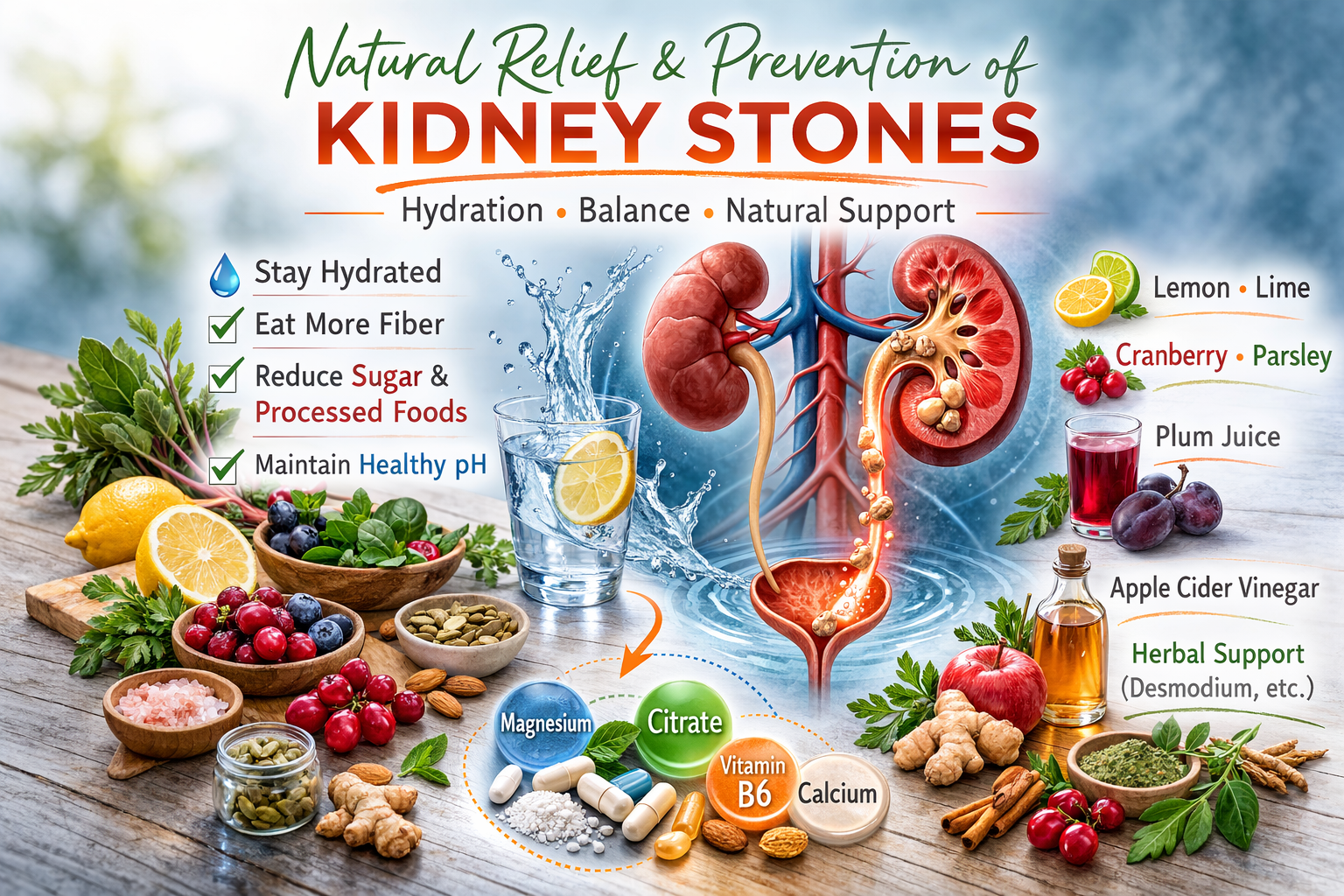
Kidney stones have a reputation for being brutally painful, and for good reason. On a recent episode of The Voice of Health, Dr. Robert Prather and Lisa Prather walked through what kidney stones are, why they form, and how a “structure-function” approach can support both prevention and relief.
If you’ve ever had a kidney stone (or suspect one may be brewing), this guide will help you understand what’s happening, what to watch for, and what you can do to support your body’s natural balance, what Dr. Prather calls homeostasis.
What are kidney stones?
Kidney stones are small crystals that form when material in the urine falls out of suspension and begins to clump together. Your body has built-in mechanisms to keep minerals and compounds dissolved and moving out smoothly—but when the system gets out of balance (often from hydration, diet, mineral regulation, or pH shifts), crystals can form, grow, and eventually cause symptoms.
And yes—people often describe passing a stone as one of the most painful experiences they’ve ever had.
Not all kidney stones are the same (and that matters)
A key point from the episode: identifying the type of stone is critical, because certain strategies may help one type but irritate another.
Here are the major categories discussed:
Calcium oxalate/calcium phosphate stones (most common)
Often associated with more acidic urine
People may notice small dark “seed-like” fragments when passing them
Calcium phosphate “staghorn” stones
Can form jagged shapes (which can be especially painful)
Often visible on imaging
Magnesium ammonium phosphate stones
Often triggered by chronic urinary tract infections
May also form staghorn shapes and can require a different approach
Uric acid stones
May not show up on standard imaging (sometimes needs CT)
Often linked with dehydration and may correlate with gout patterns
Cystine stones (rare)
Typically hereditary
Bottom line: if you’ve had stones before, ask your provider what type they were—or consider testing to clarify.
What causes kidney stones?
The conversation repeatedly returned to one theme: modern lifestyle drives risk.
Common contributors discussed include:
Western dietary patterns
Low fiber intake
Refined carbs (white bread, sugar)
High animal protein intake
High-fat processed foods
Soft drinks (especially those with high-fructose corn syrup)
Dehydration
Especially common in hot climates (“kidney stone belt” areas where sweating is higher)
Metabolic issues
Obesity and insulin resistance patterns
“Metabolic syndrome” (larger waist circumference, high triglycerides, hypertension)
Endocrine factors
Thyroid, adrenal, and parathyroid regulation can influence mineral balance and stone risk
Oxalate-heavy food patterns
For some people, oxalates can be a significant trigger (best evaluated case-by-case)
The 4 stages of a kidney stone (and why symptoms can be confusing)
Dr. Prather described four stages:
Formation in the kidney
Often no symptoms
Movement into the ureter (kidney to bladder)
This is when pain often starts
Interestingly, pain can start low (groin area) and seem to “move upward” as the stone travels
Entry into the bladder
Many people feel temporary relief here
This may be a window where supportive strategies can be especially helpful
Passing through the urethra
Pain often spikes again during passage
A standout clinical note: many people think they have “low back pain” when it’s actually kidney involvement. Dr. Prather shared that a meaningful portion of stubborn “back pain” cases can trace back to kidney stress or stones.
How common are kidney stones?
Kidney stones are no longer rare. The episode noted:
A significant portion of Americans will experience a kidney stone at some point
ER visits for kidney stones are extremely common
Men may be more affected, potentially due to dietary patterns (particularly higher meat intake)
Recurrence is frequent when prevention isn’t addressed
Disease care vs. structure-function care: what’s the difference?
Disease care (conventional) commonly includes:
Pain relief (often NSAIDs)
Medications to relax the ureter (alpha blockers)
Citrate prescriptions (like potassium citrate)
Diuretics in select cases
Uric acid medications (like allopurinol)
Procedures when needed (lithotripsy/shockwave, scope-based removal)
Dr. Prather emphasized that conventional care can be excellent when stones are large, obstructive, or severe.
Structure-function care focuses more on:
Prevention and early-stage support
Diet and hydration strategies
Mineral and pH balance
Identifying root contributors (including endocrine and toxic burden factors)
Supportive therapies to help reduce pain and support function
Diet and kidney stones: the “non-negotiable” conversation
If you’re not changing your diet, you may not be addressing the root patterns that set stones up in the first place.
Dr. Prather highlighted:
Fiber, fiber, fiber
Reducing refined carbs and processed foods
Avoiding fast foods and soda (especially high-fructose corn syrup)
Tailoring the diet based on the stone type when possible
A simple example shared: switching from refined grains to whole grains has been associated with meaningful reductions in recurrence for some people.
Why urine pH (alkalinity) matters
A large percentage of stones are associated with more acidic urine, often driven by diet and dehydration.
The goal is not “as alkaline as possible,” but rather balanced homeostasis. Too alkaline can also create problems (though this is less common than overly acidic patterns).
Key supplements discussed for kidney stone support
Dr. Prather highlighted several nutrients that may support kidney stone prevention and mineral balance:
Magnesium
Vitamin B6
Calcium (strategic, not excessive)
A counterintuitive point: in some patterns, low calcium intake may worsen calcium dysregulation
Citrates
Potassium citrate/sodium citrate
Magnesium citrate was described as especially helpful for many common stone patterns
Additional support nutrients mentioned:
Inositol
Vitamins A, D, K (fat-soluble vitamins—balance matters)
Fish oils
Phosphorus (context-dependent)
Because individual needs vary (and because too much of certain nutrients can backfire), this is best personalized.
Diagnostics that matter: hair analysis, blood work, and hydration status
A standout section of the episode focused on testing, including:
Hair analysis
Used to evaluate mineral patterns and potential contributors. Dr. Prather also discussed heavy metal exposure as a major risk factor in stone formation—especially:
Cadmium
Aluminum
These exposures may disrupt mineral balance and increase kidney stress.
Blood work
Helpful to assess:
Kidney function and potential damage
Mineral status
Endocrine contributors (thyroid/adrenal/parathyroid patterns)
Hydration testing
Dr. Prather emphasized hydration as a major lever:
Many people are chronically under-hydrated
Improved hydration alone may reduce risk significantly
Herbal and food-based supports mentioned
The episode discussed several options that may be supportive:
Cranberry (real cranberry—not sugar-loaded “cranberry cocktails”)
Blackcurrant (noted as even stronger in this context)
Plum juice
Rose hips (as a vitamin C source)
Parsley juice (alkalizing support)
Lemon juice + water (citric acid support), often paired with magnesium citrate
A Vietnamese herb: Desmodium styracifolium (discussed as a strong kidney-support herb)
They also discussed apple cider vinegar as a long-term support that may help dissolve smaller stones over time, while supporting an alkalizing balance.
Drinks that may increase kidney stone risk
This list surprised a lot of listeners:
Soda/colas (especially dark colas and high-fructose corn syrup)
Sweet tea (especially in high quantities)
Artificial fruit punches
Energy drinks
Some sports drinks
Beer and wine (in higher amounts)
Orange juice (noted as potentially increasing stone risk vs. lemon being supportive)
Coffee: one cup daily may be fine for some, but more may increase risk; decaf was discussed as a “no” in this context
Symptoms to watch for
Common symptoms discussed:
Low back pain (sometimes mistaken for a musculoskeletal issue)
Pain that radiates into the groin
Blood in urine
Nausea/vomiting
Fever/chills (especially concerning if infection is present)
Cloudy urine or unusually strong odor (sometimes an early warning sign)
When to go to the ER
You should seek urgent care if you have:
Severe, unmanageable pain
Significant blood in urine
Fever/chills (possible infection)
Vomiting/dehydration
Concern for obstruction or a stone too large to pass
Supportive options during an active stone episode
Alongside hydration and citrate support, Dr. Prather discussed:
IV hydration as a rapid support strategy in some cases
Acupuncture for pain reduction
Auricular therapy (ear-based neuro-regulation) to help calm pain pathways—especially for recurrent stone sufferers whose nervous systems have become sensitized to the pattern
A practical “start here” plan (prevention-focused)
If you’re looking for a grounded place to begin:
Hydrate consistently
Aim for steady intake throughout the day
Pay attention to sweat loss, caffeine, and exercise
Remove the biggest dietary triggers
High-fructose corn syrup and soda are top targets
Swap refined carbs for whole foods and fiber-forward meals
Increase fiber daily
Whole foods first (vegetables, legumes, whole grains when tolerated)
Address pH and mineral balance
Consider testing and personalization rather than guessing
If stones are recurring, look deeper
Endocrine patterns, chronic infections, mineral dysregulation, and toxic exposures
Final note
Kidney stones are often a sign that the body has drifted out of balance—hydration, diet, minerals, and pH regulation all matter. The good news is that many people can reduce recurrence and improve resilience by addressing those root patterns early.
This blog is educational and not medical advice. If you think you’re having a kidney stone attack or you have severe symptoms, seek urgent medical care.