The Number Three Killer in America: Understanding Unintentional Injuries
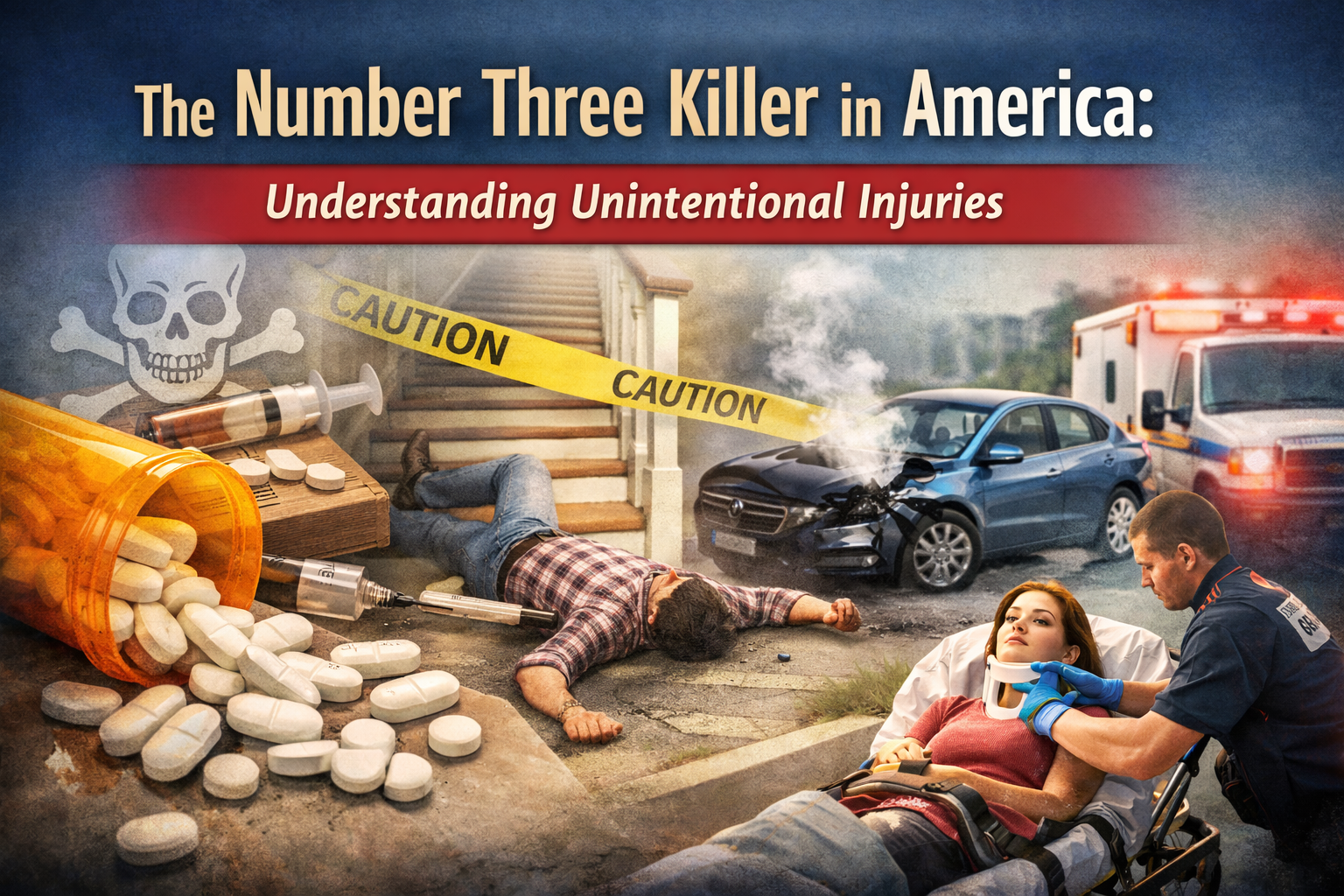
When most people think about the leading causes of death in the United States, they usually think of heart disease, cancer, and stroke. But according to the discussion in this episode of The Voice of Health, stroke has moved to number four, and the number three killer is now unintentional injuries, often referred to as accidents.
That may come as a surprise, but it highlights an important truth: many of the greatest health threats are not always the ones people talk about most. In this episode, Dr. Robert Prather breaks down what falls into this category, why it has risen so dramatically, and what practical steps can help reduce risk.
What Are Unintentional Injuries?
Unintentional injuries are deaths that happen without intent. In other words, these are situations where no one planned for harm to occur. They include things like poisoning, falls, and motor vehicle accidents.
These incidents are categorized as injuries because not every injury leads to death, but in this case, the focus is on those that do. The fact that this category has risen to the number three leading cause of death shows just how significant the issue has become.
The Leading Causes of Death
As discussed in the episode, the leading causes of death in the United States include:
Heart disease
Cancer
Unintentional injuries
Stroke
Chronic lower respiratory disease
Alzheimer’s disease
Diabetes
Kidney disease
Chronic liver disease
COVID
This episode is part of a broader series exploring all ten of these leading causes and the factors that contribute to them.
Are Accidental Deaths the Same for Men and Women?
Interestingly, unintentional injuries affect men and women differently. In the conversation, Dr. Prather explains that accidental injuries rank much higher among men than women.
For men, accidental injuries account for a much larger percentage of total deaths. For women, this category ranks lower. That difference may reflect a range of behavioral and lifestyle factors, including risk-taking tendencies, occupational exposures, and differences in daily habits.
The Three Leading Causes of Unintentional Injury Deaths
Dr. Prather highlights three major causes that make up the vast majority of accidental deaths:
1. Poisoning
Poisoning is the leading cause of unintentional injury deaths and makes up the largest share of this category. A major driver behind this is drug overdose, particularly opioid overdose.
This is one of the biggest reasons accidental deaths have climbed so significantly over the last two decades.
2. Falls
Falls are the second leading cause of accidental death. These are especially common in older adults and can have devastating consequences, particularly when fractures, loss of mobility, and complications follow.
3. Motor Vehicle Accidents
Motor vehicle accidents remain a major cause of accidental death, though they have declined compared to previous decades. Improvements in vehicle safety, seatbelt use, and public awareness have likely helped reduce fatalities.
The Opioid Crisis and the Rise in Poisoning Deaths
One of the most sobering parts of this episode is the discussion around opioids. Dr. Prather explains that opioid overdoses have played a central role in the dramatic rise in poisoning deaths.
According to the discussion, opioid-related deaths increased sharply over the years and became one of the main reasons accidental injuries rose high enough to surpass stroke.
The episode also explores how this crisis developed. Dr. Prather points to aggressive pharmaceutical marketing, overreliance on medication-based pain treatment, and a healthcare system that often leaves little time to address root causes. Instead of looking for why a person is in pain, many patients were simply given prescriptions.
That pattern helped fuel long-term dependence and addiction, often beginning with legitimate prescriptions after injury, surgery, or chronic pain.
Why the Death Rate Stayed High Even After Prescriptions Dropped
While opioid prescribing has reportedly decreased, the death rate has remained high. One major reason discussed in the episode is fentanyl.
Fentanyl is far more potent than many other opioids and has contributed significantly to overdose deaths. It also presents a serious danger because it can be mixed into other substances without the user knowing. In some cases, people may think they are taking something relatively harmless and instead are exposed to a deadly dose.
This is one reason education, awareness, and prevention remain so important.
Falls: A Major Threat to Older Adults
Falls are a leading cause of injury-related death, especially in adults over age 65. Dr. Prather emphasizes that balance, grip strength, muscle strength, bone health, and kinesthetic awareness all play a role in reducing fall risk.
Many falls happen in the home, with bathrooms being one of the most common places. Wet floors, rugs, poor balance, weakness, and loss of body awareness all contribute.
The conversation also emphasizes an important point: loss of movement is not an inevitable part of aging. Staying active, maintaining coordination, and preserving strength can dramatically improve quality of life and reduce fall risk.
Motor Vehicle Accidents: Progress, but Still a Problem
Motor vehicle deaths have decreased over time, which is encouraging. Safer vehicles, airbags, seatbelts, and changes in driving patterns have all helped.
Still, impaired driving remains a major issue. Alcohol and drug use continue to contribute heavily to fatal crashes. Dr. Prather also notes that newer transportation options like Uber and Lyft may help reduce impaired driving by giving people better alternatives.
The message is simple: if you are drinking or using anything that affects your cognition, do not drive.
A Structure-Function Approach to Prevention
Throughout the episode, Dr. Prather returns to an important theme: many health problems, including chronic pain, need a root-cause approach rather than symptom masking.
Instead of relying only on medications, he emphasizes the value of what he calls structure-function care approaches that seek to identify the underlying cause of pain, mobility issues, balance problems, and other dysfunctions. This may include chiropractic care, acupuncture, physiotherapy, and other supportive therapies that help improve the body’s function rather than simply cover symptoms.
This kind of approach may be especially important in reducing dependency on pain medication and supporting healthier long-term outcomes.
Final Thoughts
The fact that unintentional injuries are now the third leading cause of death in America is a wake-up call. Poisoning, falls, and motor vehicle accidents are not random statistics; they reflect major issues in pain management, public health, aging, and lifestyle.
The good news is that many of these risks are preventable. Better education, safer habits, improved pain care, fall prevention, and wise decision-making can all make a meaningful difference.
Awareness matters. Prevention matters. And addressing the root cause of pain and dysfunction matters.
If we want to improve health outcomes in America, we cannot ignore the impact of unintentional injuries.