Poisoning Deaths and the Opioid Crisis: A Structure-Function Perspective
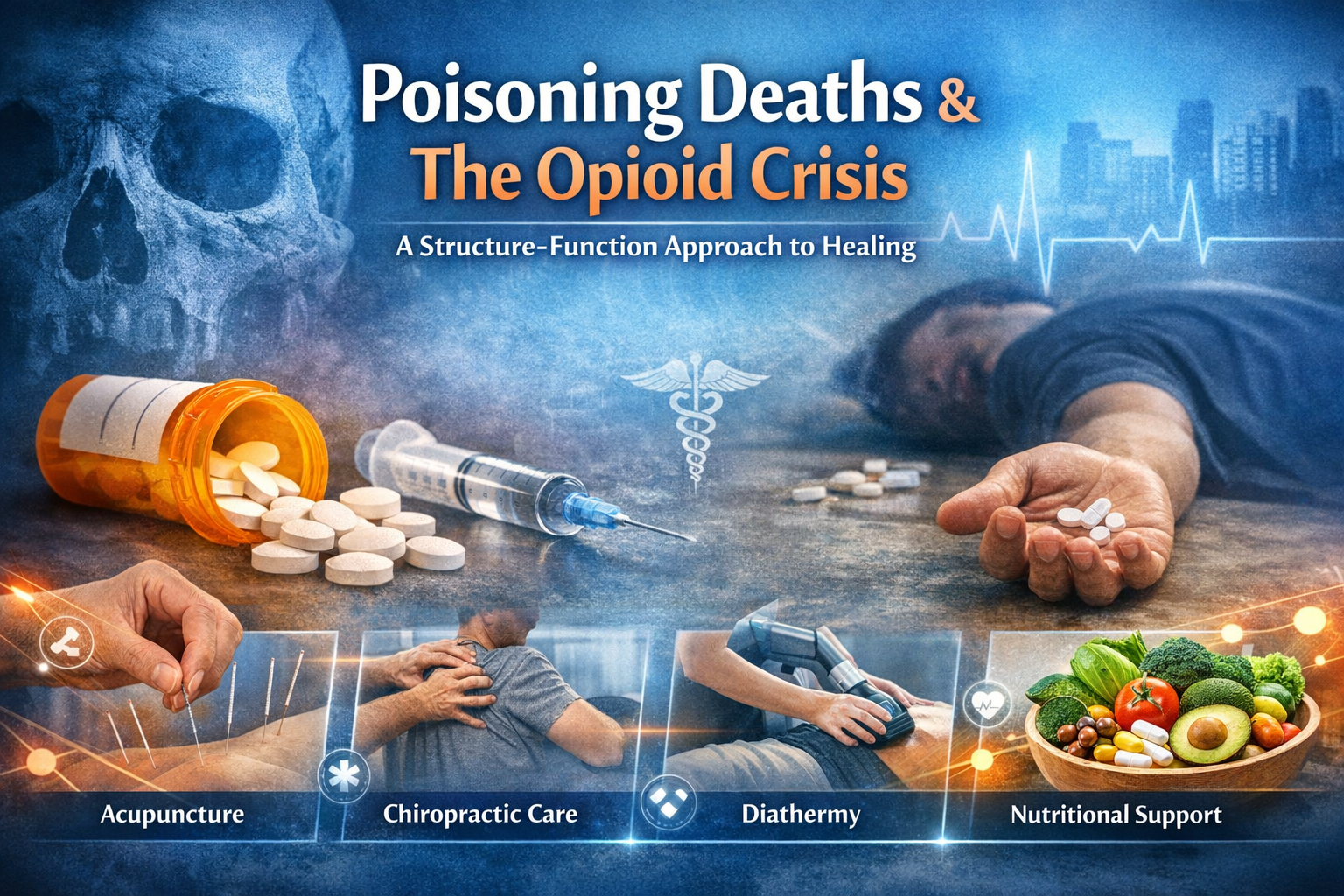
When people think about the leading causes of death in America, they often assume stroke is still number three. But that has changed. Today, unintentional injuries rank as the third leading cause of death, and within that category, poisoning deaths are the largest contributor.
This article is part two in a four-part series on unintentional injuries and focuses specifically on poisoning, opioid-related deaths, and how a structure-function approach to care may support pain relief, healing, and overall health.
Poisoning Is a Major Cause of Unintentional Death
Poisoning deaths account for a significant portion of accidental deaths in the United States. According to the discussion in this episode, poisoning is responsible for roughly 100,000 deaths annually, making up about 45% of all unintentional injury deaths.
The overwhelming majority of these poisoning deaths are tied to opioids. In fact, opioids account for around 80% of poisoning-related deaths, making them the leading driver in this category.
Poisoning, simply put, is what happens when a harmful substance enters the body and causes serious damage or death. In the broader holistic language Dr. Prather uses, these harmful substances can be thought of as xenobiotics — “strangers to the body.” Xenobiotics include substances the body does not recognize as supportive or safe, including toxins, chemicals, and many drugs.
How the Opioid Crisis Escalated
From 2003 to 2019, opioid-related deaths rose dramatically. During that time, pain began to be promoted as the “fifth vital sign,” and a major push was made to treat pain more aggressively with prescription medications.
The problem was not the acknowledgment that pain matters. Pain does matter. The problem was the widespread promotion of opioid drugs as a long-term solution, despite known risks of dependence and addiction.
As opioid prescribing increased, so did addiction, overdose, and death.
A major part of this story involved the aggressive marketing of opioid medications, especially OxyContin. These drugs were promoted as safe and effective for chronic pain, despite serious concerns about their addictive potential. The result was a public health crisis that continues to affect families and communities across the country.
Why Opioids Become So Dangerous
One of the most troubling aspects of opioid use is that they can actually create the very cycle they claim to solve.
While opioids may temporarily reduce pain, long-term use can interfere with the body’s own natural opioid production and damage opioid receptor function. Over time, this can mean:
the same dose stops working
more of the drug is needed for the same effect
pain becomes harder to manage
stopping the drug can trigger severe withdrawal and increased pain
In other words, a person may begin taking opioids for pain relief but find themselves trapped in a cycle where the body no longer regulates pain normally without them.
This is one reason opioid withdrawal can be so intense. For many people, it is not simply a matter of “willpower.” The body and brain have been changed by the medication.
A Structure-Function Approach to Pain and Healing
At Holistic Integration, the model of care discussed is called structure-function care.
This approach is different from a symptom-suppression model. Rather than focusing only on reducing symptoms with medications, structure-function care aims to help the body move back toward balance, adaptation, and homeostasis.
That includes addressing both:
structure — the alignment and mechanics of the body
function — how the body is operating physiologically
The goal is to help the body heal and regulate itself more effectively.
This does not mean medications never have a place. In acute situations, emergencies, or end-of-life care, pharmaceuticals can be extremely valuable and lifesaving. But for chronic pain and long-term healing, the structure-function model argues that the body often needs more than symptom suppression.
Natural and Integrative Tools That May Help with Pain
One of the major themes of the episode is that many non-drug therapies can play a meaningful role in pain management and recovery.
Acupuncture
Acupuncture was described as one of the most powerful tools for both pain relief and support during opioid withdrawal. According to the discussion, acupuncture may help stimulate the body’s own natural pain-relieving mechanisms and support healthier opioid receptor function.
Patients often report significant relief, and in some cases, acupuncture can become an important part of reducing dependence on pain medication.
Auricular Therapy
Auricular therapy, including ear seeds and other ear-based techniques, works through points on the ear that correspond with different brain and nervous system pathways.
This approach may be used to support both:
pain pattern regulation
addiction and craving support
Because ear seeds can stay in place for a period of time, they also give patients a way to continue stimulation between visits.
Chiropractic Care
Chiropractic care is used to support proper nervous system function and structural balance. When the body is misaligned or under mechanical stress, pain patterns can persist and healing can be delayed.
Correcting structural problems may help reduce pain, improve mobility, and create a better environment for the body to recover.
Physiotherapy and Corrective Care
Additional therapies mentioned include:
corrective exercise
craniosacral work
therapeutic ultrasound
electrical stimulation
red light support
decompression
vibration therapy
fascial release with Rapid Release tools
Each of these may play a role in improving circulation, relieving pain, improving function, and helping the body recover without relying solely on medications.
Diathermy
Diathermy was highlighted as a therapy that helps improve circulation, including both blood and lymphatic flow. This may be especially supportive when the body is under toxic burden or moving through detoxification.
Improved circulation can help with:
congestion
healing
lymphatic movement
general detox support
Diagnostics Matter
A major principle behind the structure-function model is that you cannot effectively correct what you have not properly identified.
Rather than stopping at a diagnosis label, this approach emphasizes looking for the underlying factors contributing to the problem. That may include issues involving:
toxic burden
nutrient deficiencies
inflammation
structural stress
chronic infections
immune dysfunction
impaired detoxification
nervous system imbalance
The goal is not simply to ask, “What disease is this?” but also, “Why is this body struggling in the first place?”
The Problem of Polypharmacy
The episode also highlights the growing concern of polypharmacy, which refers to taking multiple medications at once.
When a person is taking five or more medications, the risk of drug interactions and unintended effects rises substantially. In many cases, these combinations can become dangerous and may contribute to illness, adverse events, or even death.
This is especially concerning in a culture where medication use is widespread. The more medications a person takes, the more important it becomes to carefully evaluate side effects, interactions, and the possibility that some symptoms may be medication-related.
A More Complete Way to Think About Pain
Pain is real. Suffering is real. And people deserve compassionate, effective care.
But the answer to pain cannot always be more medication.
The opioid crisis has revealed what can happen when symptom relief is pursued without enough attention to the body’s long-term adaptation, healing capacity, and root causes. A structure-function approach offers a different perspective — one that values pain relief while also working to restore balance, support detoxification, improve nervous system function, and help the body heal.
For many people, the path forward may include both conventional and integrative care. But lasting healing often requires more than covering symptoms. It requires asking deeper questions and supporting the body as a whole.
Final Thoughts
Poisoning deaths, especially those tied to opioids, remain a major public health issue. While medications may have an important short-term role in certain situations, long-term dependence can come with serious consequences.
A structure-function approach emphasizes a broader model of care — one that seeks not only to reduce pain, but to understand why pain is present, what is keeping the body from healing, and how natural, restorative therapies may help.
In a healthcare landscape often centered on symptom control, this approach reminds us that true healing is about more than suppressing discomfort. It is about restoring the body’s ability to function, adapt, and thrive.