Stroke Recovery and Prevention: A Structure-Function Approach to Healing
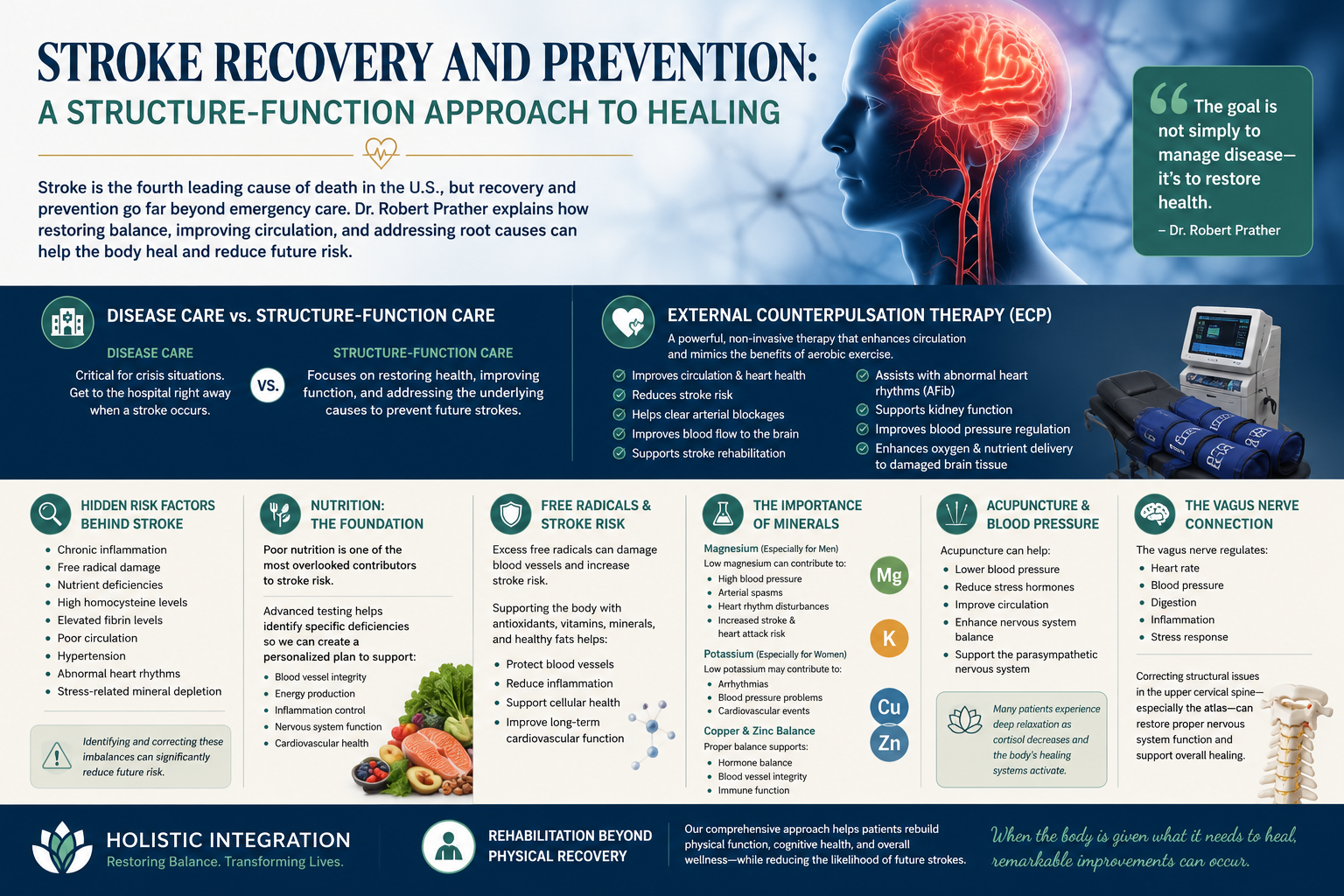
Stroke, also known as a cerebrovascular accident (CVA), remains the fourth leading cause of death in the United States. While emergency medical care is critical when a stroke occurs, many people don't realize there is much more that can be done after the crisis has passed.
On this episode of The Voice of Health, Dr. Robert Prather explains how a structure-function approach to healthcare can play a vital role in both stroke prevention and rehabilitation.
Disease Care vs. Structure-Function Care
When someone is actively having a stroke, emergency medical care is essential.
"Don't bring someone having a stroke to my office," Dr. Prather explains. "Take them to the hospital."
Emergency medicine excels at crisis intervention. It can save lives when minutes matter. However, once the immediate danger has passed, a different approach becomes important.
Structure-function care focuses on restoring health, improving function, and helping the body return to balance. Rather than simply managing symptoms, the goal is to identify and address the underlying factors that contributed to the stroke in the first place.
According to Dr. Prather, true health is the body's ability to maintain homeostasis—its natural state of balance and self-regulation.
The Hidden Risk Factors Behind Stroke
Many people think strokes are caused solely by high cholesterol or aging. While those factors may play a role, Dr. Prather believes there are several underlying contributors that deserve attention:
Chronic inflammation
Free radical damage
Nutrient deficiencies
High homocysteine levels
Elevated fibrin levels
Poor circulation
Hypertension
Abnormal heart rhythms
Stress-related mineral depletion
By identifying and correcting these imbalances, patients may significantly reduce their future risk.
External Counterpulsation Therapy (ECP): An Underused Tool
One of the most powerful therapies discussed was External Counterpulsation Therapy (ECP).
Originally developed decades ago and studied extensively in cardiovascular medicine, ECP works by enhancing circulation throughout the body and mimicking many of the benefits of aerobic exercise.
Dr. Prather describes ECP as one of the most effective therapies available for:
Improving circulation
Supporting heart health
Reducing stroke risk
Helping clear arterial blockages
Improving blood flow to the brain
Supporting stroke rehabilitation
Assisting with abnormal heart rhythms such as atrial fibrillation
Supporting kidney function
Improving blood pressure regulation
For stroke survivors, improved circulation means greater delivery of oxygen and nutrients to damaged brain tissue, which may support recovery and cognitive function.
Why Blood Flow Matters
The brain depends on a constant supply of oxygen and nutrients.
Following a stroke, damaged brain tissue requires optimal circulation to support healing. Dr. Prather notes that many patients report improvements in:
Memory
Focus
Cognitive processing
Energy
Mental clarity
As blood flow improves, the brain often gains access to collateral circulation pathways that may help compensate for damaged areas.
Nutrition: The Foundation of Stroke Prevention
One of the most overlooked contributors to stroke risk is poor nutrition.
Dr. Prather emphasizes that many stroke patients have underlying deficiencies that affect:
Blood vessel integrity
Energy production
Inflammation control
Nervous system function
Cardiovascular health
Rather than guessing which nutrients are needed, Holistic Integration uses advanced testing to identify specific deficiencies and create personalized nutritional plans.
Free Radicals and Stroke Risk
Free radicals are unstable molecules that can damage blood vessels and tissues throughout the body.
According to Dr. Prather, excessive free radical damage can contribute to:
Atherosclerosis
Arterial damage
Blood vessel weakness
Stroke risk
Cardiovascular disease
The body relies on antioxidants, vitamins, minerals, and healthy fats to neutralize these damaging compounds.
Supporting the body's natural antioxidant systems may help reduce ongoing damage and improve long-term cardiovascular health.
The Importance of Minerals
Mineral balance plays a critical role in stroke prevention.
Magnesium
Dr. Prather identifies magnesium deficiency as one of the most common and dangerous imbalances he sees, especially in men.
Low magnesium levels can contribute to:
High blood pressure
Arterial spasms
Heart rhythm disturbances
Increased stroke risk
Heart attacks
Stress rapidly depletes magnesium stores, making supplementation and testing particularly important.
Potassium
For women, potassium depletion can be a significant issue, especially during periods of stress.
Low potassium levels may contribute to:
Arrhythmias
Blood pressure problems
Cardiovascular events
Copper and Zinc
The copper-zinc ratio influences:
Hormone balance
Blood vessel integrity
Immune function
Cardiovascular health
Maintaining proper balance is essential for preventing vascular damage.
Acupuncture and Blood Pressure Control
Acupuncture offers several benefits for stroke prevention and recovery.
According to Dr. Prather, acupuncture can:
Lower blood pressure
Reduce stress hormones
Improve circulation
Enhance nervous system balance
Support parasympathetic nervous system function
Many patients experience deep relaxation during treatment as cortisol levels decrease and the body's healing systems become more active.
The Vagus Nerve Connection
The vagus nerve plays a major role in regulating:
Heart rate
Blood pressure
Digestion
Inflammation
Stress response
When vagal function is impaired, the body struggles to maintain balance.
Dr. Prather emphasizes that correcting structural issues affecting the upper cervical spine—particularly the atlas vertebra—can be an important step in restoring proper nervous system function.
Rehabilitation Beyond Physical Recovery
Stroke recovery isn't just about regaining physical movement.
Successful rehabilitation often includes improving:
Balance
Coordination
Cognition
Memory
Brain function
At Holistic Integration, rehabilitation programs focus on helping patients rebuild both physical and neurological function while reducing the likelihood of future strokes.
A Different Way to Think About Stroke
Most people think of stroke treatment only in terms of emergency intervention. While that care is absolutely necessary, recovery and prevention require a broader perspective.
By improving circulation, correcting nutritional deficiencies, balancing minerals, supporting nervous system function, reducing inflammation, and restoring overall health, many patients can significantly improve both their recovery and long-term health outcomes.
As Dr. Prather often reminds patients, the goal is not simply to manage disease—it's to restore health.
When the body is given what it needs to heal, remarkable improvements can occur.